Choosing the right pouring medium is essential for achieving consistent pours, vibrant color separation, and smooth flow in acrylic art. The best options balance viscosity, transparency, drying behavior, and even cell formation. This guide highlights five popular products that American painters rely on for large projects, education studios, and serious hobbyists. Read on to compare their capabilities, surface suitability, and how they perform with different pouring techniques—from dirty pours to direct pours and glaze applications.
| Product | Brand | Volume | Key Benefit |
|---|---|---|---|
| Nicpro Jumbo Pouring Medium 69oz | Nicpro | 69 oz (2040 ml) | Built-in pump; high-flow thinning; visual bottle |
| Apple Barrel Pouring Medium 16 oz | Apple Barrel | 16 oz | Satin finish; convenient size; versatile pouring techniques |
| Artecho Pouring Effects Medium 64oz | Artecho | 64 oz (1.89 L) | Translucent; reduces viscosity; enhances flow |
| U.S. Art Supply Professional Gloss Pouring Medium 64oz | U.S. Art Supply | 64 oz | Gloss finish; viscosity adjuster; supports cell effects |
| Nicpro 14 Colors Pouring Paint Kit | Nicpro | 8.45 oz per bottle (14 colors) | Ready-to-pour; wide color range; includes tools |
Nicpro Jumbo Pouring Medium 69oz

Nicpro’s Jumbo Pouring Medium delivers substantial volume for large projects without constant refills. The 69-ounce (2040 ml) bottle is designed for classrooms, workshops, and professional studios that pour frequently. A built-in pump minimizes drips and spills, speeding up workflow and reducing waste. Beyond thinning, this medium improves flow and transparency when mixed with acrylic paints, helping colors stay distinct rather than blending aggressively. It also contributes to a resilient surface by reducing cracking as the finish dries, which is especially important for large canvases and mixed-media pieces. The bottle is translucent, so you can visually gauge remaining supply at a glance. For artists who pour often, this option helps maintain consistency across sessions.
The medium creates a smooth, even layer that supports a range of pouring techniques, from soft cell formation to clean glazes. While it provides a reliable thinning effect, users should test compatibility with their preferred acrylics and pigments, as each brand reacts a little differently to pouring mediums. The weight and balance of the bottle make handling easier during long sessions, and the pump mechanism helps maintain a mess-free station. Overall, this is a solid bulk option for those who value volume, reliability, and minimal downtime between pours.
Apple Barrel Pouring Medium 16 Oz
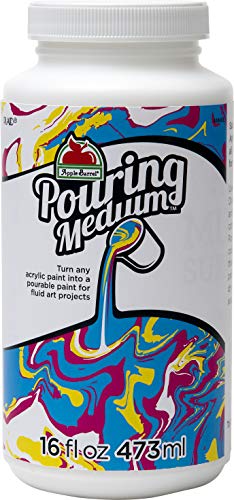
Apple Barrel’s Pouring Medium comes in a convenient 16-ounce bottle, making it a practical choice for artists who want to experiment with pouring techniques without committing to bulk quantities. This medium enables acrylic paint to reach pourable fluidity, opening doors to marbling, swirls, and layered effects. It dries to a satin finish that softens the glow of vivid colors while maintaining clarity. The formula is designed to work with a variety of direct pours and dirty pours, providing a reliable base for both experimental and more controlled pours. Its compact size makes it ideal for home studios or classrooms with limited storage.
Compared to larger-volume mediums, the 16-ounce bottle is easier to rotate among different color palettes without long-term storage concerns. For beginners, Apple Barrel offers a forgiving starting point while still delivering professional-looking results. It’s well-suited for smaller canvases, wooden panels, and even glass surfaces, where a gentle sheen can enhance color depth. While it may require a few tests to dial in the exact viscosity for your pigments, this medium offers a balanced blend of performance and accessibility.
Artecho Pouring Effects Medium 64oz

Artecho’s Pouring Effects Medium comes in a generous 64-ounce (1.89 L) bottle and emphasizes visibility, with a translucent formula and a visual bottle to help track usage. This medium is designed to reduce viscosity and improve brush stroke control while enhancing flow, transparency, and brightness. It’s well-suited for glazing and creating soft transitions in fluid art. The medium supports easy pouring across canvases, boards, and stones, enabling artists to layer color and build depth without excessive drag. For those pursuing glazing techniques or layered pours, Artecho offers a dependable blend that supports both beginners and seasoned painters.
As with any large-volume medium, testing on your surface and with your pigments is prudent to nail the exact pouring behavior you want. Artecho’s formula aims to keep pours smooth and consistent, helping to prevent cracking on dry surfaces. Its translucent nature lets you monitor how the paint and medium interact during the pour, which is particularly helpful when planning multiple layers. The result is a versatile option for flow art, abstract pours, and experimental textures.
U.S. Art Supply Gloss Pouring Medium 64oz

The U.S. Art Supply Professional Gloss Pouring Medium is a full 64-ounce bottle designed to boost gloss and improve flow for pouring techniques. The glossy, clear medium combines acrylic polymers to create smooth sheets, puddles, and even cell effects when paired with fluid acrylic pigments. It acts as a viscosity adjuster, helping paints flow more easily across substrates like canvas, wood, and glass. This option is especially appealing to artists who want a high-shine finish and crisp color separation in their pours. It’s suitable for both direct pours and more complex techniques that rely on clear, glossy layers.
While gloss finishes can accentuate color, they may also reveal surface imperfections more readily than matte finishes. Testing is advised on your preferred substrate. The medium’s performance benefits include reduced cracking and better flow, contributing to vibrant pours with a professional appearance. It pairs well with a wide range of acrylic pigments and can be a staple in studios focusing on glossy, high-contrast fluid art.
Nicpro 14 Colors Pouring Paint Kit

The Nicpro pouring paint kit provides 14 ready-to-pour colors, each packaged at 8.45 ounces with a complete setup that supports beginners and experienced artists alike. The kit includes pouring oil and essential tools such as mixing sticks, cups, canvas, gloves, pipettes, and strainers, along with a few helpful accessories. The paints are marketed as high-flow and pre-mixed for direct pouring, designed to produce layered, marbled, and cell-rich effects without extensive prep. This set is ideal for artists who want a broad color range and a one-stop package to start pouring right away.
While these paints are ready to pour, they are not a substitute for a dedicated pouring medium in every case. Depending on the desired finish, you may still pair these paints with a separate medium to adjust viscosity or to achieve longer pours. The kit’s versatility makes it a popular option for classrooms, workshops, and home studios that emphasize variety and immediate results. Always test combinations with your preferred surfaces to optimize appearance and longevity of the pours.
Buying Guide
Key purchase considerations
When selecting a pouring medium, consider volume needs, surface compatibility, and finish. Larger-volume mediums reduce refilling interruptions for big canvases, while smaller bottles suit beginners or space-constrained studios. Finish options range from satin to gloss; choose based on whether you want muted or high-shine results. Some mediums include practical features, such as built-in pumps for mess-free dispensing, visible bottles to monitor usage, or pre-mixed formulas optimized for specific pours. Always verify pigment compatibility and test on your chosen substrate before committing to a full project.
Medium vs ready-to-pour paints
Pouring mediums are designed to thin acrylics and control flow, creating cells and glazing effects without altering color brightness too dramatically. Ready-to-pour paints simplify setup by already containing a compatible medium, which is convenient for beginners. However, they may offer less flexibility for customizing viscosity or finish. For artists who value control and long-term results, combining a high-quality pouring medium with your preferred paints often yields the most consistent pours and the ability to tailor the flow to different effects.
Volume, cost, and studio workflow
Volume matters for large works and teaching spaces, but cost per use varies with viscosity and drying behavior. A bulk medium with a built-in pump can reduce waste and speed up workflows in classrooms or studios that run multiple sessions daily. On the other hand, smaller bottles are excellent for experimentation and color-matching tests before scaling up. Factor in storage considerations, as some mediums may settle or separate over time. Reading product reviews and performing small test pours helps determine which volume and formula align with your painting style.
Finish, texture, and cell formation
The finish (gloss, satin, or matte) affects color vibrancy and perceived depth. Gloss mediums emphasize brightness and color clarity, while satin finishes soften the sheen. Some mediums promote cell formation, a hallmark of many acrylic pours, particularly when silicone or other additives are used with the paint. If cell creation is a priority, look for mediums that explicitly mention flow, gloss, and compatibility with silicone oils. Testing multiple combinations can reveal how your pigments interact with each medium to achieve the desired texture and depth.
Safety, cleanup, and storage
Most pouring mediums are water-based and non-toxic, but it’s wise to check the Material Safety Data Sheet (MSDS) for each product used with children or in classrooms. Clean-up typically involves soap and water, though some surfaces may require specific cleaners. Store unopened bottles upright in a cool, dry place to preserve viscosity and prevent separation. Remember to label containers clearly and keep out of reach of children during use. Proper storage helps maintain consistency across sessions and reduces material waste.
Practical tips for getting started
- Start with small test pours to dial in the desired flow rate before committing to a full canvas.
- Label color combinations and the pouring technique used to recreate successful results later.
- Maintain an organized workspace to minimize spills and allow quick color changes.
- Record ambient conditions (temperature, humidity) as they can influence drying time and cell formation.
- Keep a dedicated palette for tests and note which pigment brands pair best with your chosen medium.
In summary, the best pouring medium for acrylic paint depends on your project scale, preferred finish, and tolerance for experimentation. The options above cover bulk bulk exercises, beginner-friendly kits, and ready-to-pour systems. For most artists, starting with a mid-size bottle and testing with a few favorite paints provides a clear sense of how viscosity and finish behave in your studio. As skills grow, you can explore bulk mediums with advanced features to support larger works and more complex pouring techniques.