
Choosing the right 3D printer and compatible materials is key for jewelry prototyping, casting, and finishing. This guide focuses on five top picks that blend print quality, burn-out behavior, and ease of finishing for jewelry work. From fast, auto-leveling printers to castable resins with low ash content, these tools support both hobbyists and small studios in producing reliable results.
| Product | Brand | Type | Why It Fits Jewelry Making |
|---|---|---|---|
| FLASHFORGE Adventurer 5M Printer | FLASHFORGE | 3D Printer | Auto leveling, high-speed printing, reliable prototyping |
| Siraya Tech Castable Resin True Blue | Siraya Tech | Castable Resin | Burns clean, ideal for thicker designs and metal parts |
| Siraya Tech Sculpt High-Temp Resin | Siraya Tech | High-Temp Resin | Heat resistance up to 250°C for molds and parts |
| Funcrecol Castable Resin Purple | FUNCRECOL | Castable Resin | Low ash, high-resolution for jewelry casting |
| BOENFU Small Wire Cutter | BOENFU | Flush Cut Pliers | Precise finishing and clean cuts for beading and assemblies |
Below, each product is examined with key features, practical use for jewelry making, and buying considerations.
FLASHFORGE Adventurer 5M Printer

The Adventurer 5M from FlashForge emphasizes ease of use for jewelry prototyping. It offers One-Click Automatic Printing with automatic bed leveling to produce flawless first layers, reducing failed prints and wasted material. Its CoreXY all-metal structure delivers stable, high-speed printing, with travel speeds up to 600 mm/s and acceleration rated for rapid production cycles. The nozzle system supports quick 3-second nozzle changes, while a fast warm‑up to 200°C helps maintain workflow momentum. A dual-sided PEI platform makes part removal straightforward, aiding efficient post-processing.
Print volume is practical for small jewelry designs, with a 220 x 220 x 220 mm build area that accommodates rings, pendants, small bracelets, and master models. While designed for resin-based workflows, the printer’s reliability and speed are valuable for iterative design and casting prep. Users should pair it with 405 nm castable resins and follow appropriate post-processing and curing steps to ensure optimal surface finish and dimensional accuracy.
Siraya Tech Castable Resin, True Blue

This castable resin is designed to burn and print cleanly. Siraya Tech Cast True Blue contains wax-like components that make burnout easier, leaving less ash during the casting process. This trait is especially helpful for thicker jewelry pieces such as bracelets, large pendants, medals, and coins, as well as metal parts requiring stable burnout. The resin is formulated to burn out cleanly, which reduces defects in the final metal piece and simplifies post-burn finishing.
Printing with ease is another highlight. The resin is described as easier to print than some other castable formulations, not requiring an ultra-dry environment or special additives. It offers high resolution and good plate adhesion, making it accessible to both new users and experienced makers. It’s designed to work well in most LCD, DLP, or SLA printers, broadening its compatibility for jewelry studios with different setups.
Widely used in jewelry casting workflows, True Blue is positioned as a versatile option for thicker designs and metal parts. When used in a compatible 405 nm printer, it supports reliable burnout and detailed surface quality, aiding in the production of intricate jewelry pieces with strong reproduction of fine details.
Siraya Tech Sculpt High-Temp Resin

Siraya Tech Sculpt is built for high-temperature applications, offering resistance up to 250°C without significant softening. This makes it suitable for prototypes and molds used in high-heat processes, such as vulcanized rubber molding or close-to-final casting tests. Its heat tolerance supports small-scale production workflows where parts need to withstand curing or forming temperatures without warping or distortion.
The resin is optimized for high-resolution output with a smooth surface finish, ideal for engineering, jewelry, and industrial applications. It’s positioned for compatibility with leading high-power DLP printers like Moonray as well as standard LCD resin printers, enabling flexible workflows. Sculpt Ultra White delivers a clean aesthetic that reduces post-processing time while preserving fine features in small jewelry pieces.
Funcrecol Castable Resin Purple
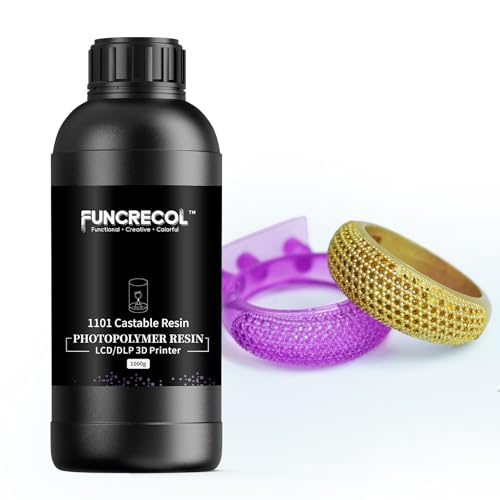
Funcrecol Castable Resin emphasizes high-resolution jewelry casting with smooth flow characteristics that facilitate detailed mold filling. The resin is designed for easy printing and quick curing, minimizing setup and post-processing time. It’s described as well-suited for professional jewelry and delicate models, making it a practical choice for designers who need reliable castability and good surface quality.
Low ash content during burnout is a key feature, helping to preserve fine surface details and minimize residue in the final casting. This trait supports clean, repeatable burnouts and reduces the risk of surface defects caused by ash or gas bubbles. The resin is marketed as compatible with 405 nm printers, aligning with common desktop SLA/DLP workflows used by jewelry makers.
BOENFU 5-Inch Wire Cutter

This flush-cut micro wire cutter is designed for tight work areas common in jewelry making. It features long-cutting jaws that enable flush cuts on beading wires, circuit boards, and small hardware, enhancing finishing precision. The cutter’s design supports smooth, clean cuts and minimizes fraying on delicate threads and wires, which is essential for quality jewelry assembly and finishing.
Construction emphasizes durability and control. The blades are built from heat-treated carbon steel with a high hardness rating to maintain sharpness over time. The non-slip, ergonomic handles are designed to reduce hand fatigue during extended use, making detailed jewelry projects more manageable and accurate.
Buying Guide
Key considerations when building a jewelry-focused 3D printing workflow include printer capabilities, resin properties, post-processing, and overall workflow efficiency. The following points help evaluate options across printers, castable resins, and essential finishing tools.
- Resin choice and burnout behavior: For jewelry casting, castable resins with predictable burnout and low ash content reduce surface defects in metal pieces. Castable resins like True Blue and Funcrecol are designed to maximize burn-out cleanliness, while Sculpt resins prioritize heat resistance for molding processes.
- Printer compatibility and resolution: A printer with reliable bed leveling, precise first layers, and stable Z-axis behavior supports intricate jewelry details. Consider printers with automatic leveling, fast curing, and compatibility with 405 nm resins for a smoother workflow.
- Print size and workflow fit: Jewelry components vary in size from fine filigree to larger pendants. Ensure the printer’s build volume accommodates your typical parts and that post-processing equipment (wash, cure, finishing) matches your throughput needs.
- Post-processing and curing: Effective cleaning, drying, and UV curing influence surface finish and dimensional stability. Plan for a curing station and proper ventilation for resin fumes during work.
- Material costs and accessibility: Castable resins, Sculpt resins, and standard resins differ in price and availability. Factor in resin yield, shelf life, and compatibility with replacement parts and printers in your shop.
- Tooling support: Fine jewelry work benefits from precise finishing tools. Flush cutters and micro-snips help achieve clean joins and flawless settings, reducing manual finishing time and improving overall quality.
- Safety and handling: Resin handling requires gloves and eye protection. Ensure proper ventilation and storage, and follow manufacturer safety data sheets for all materials used in casting and curing processes.
- Scalability: For studios, consider how a printer, resin line, and finishing tools can scale with demand. Batch casting, efficient post-processing, and reliable resins support higher output without sacrificing quality.
In summary, the combination of a capable 3D printer like the FlashForge Adventurer 5M, with a carefully selected set of castable and sculpt resins, plus essential finishing tools, offers a practical path for creating jewelry parts and prototypes with reliable burnout and refined surface finishes. The five picks above provide a balanced starting point for different budget levels and workflow preferences, helping makers move from digital designs to polished metal pieces more efficiently.