
Choosing the right canvas for oil painting directly affects color saturation, texture, and longevity. This guide reviews five versatile options that suit oil media, from linen panel surfaces prized by professionals to budget-friendly cotton canvases ideal for practice and study. Each pick balances priming, texture, and value, helping artists—from beginners to seasoned painters—find surfaces that match their technique and studio workflow. Below, a quick product snapshot followed by in-depth sections for five options, ending with practical buying considerations to help you compare surfaces side by side.
| Product | Material | Primed | Notable |
|---|---|---|---|
| KEFF 24-Pack Canvas For Painting | Cotton canvas boards | Triple-primed | Wide size range, versatile set |
| Centurion Deluxe Linen Panels | Oil-primed linen | Oil primed | Professional quality, archival potential |
| FIXSMITH Stretched White Blank Canvas | 100% cotton | Triple-primed | Value-packed, strong frame |
| ESRICH 18×24 Large Canvas Set | Cotton canvas | Acid-free gesso | Large format for studies and classes |
| GOTIDEAL 14-Piece Canvas Set | Cotton canvas | Pre-primed | Multiple sizes, beginner-friendly |
KEFF 24-Pack Canvas For Painting
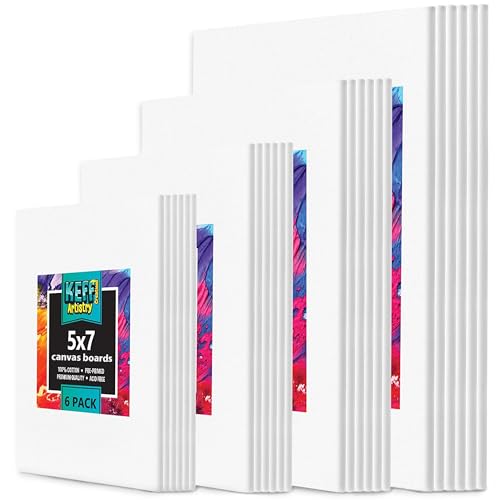
The KEFF canvas set delivers both scale and flexibility for oil painting. It includes six boards in each of four sizes: 5×7, 8×10, 9×12, and 11×14, giving artists a broad range for studies, color experiments, and finished pieces. Each surface is triple-primed, ready for use with oils, acrylics, watercolors, or tempera, making it a versatile foundation for mixed-media work. The pack is well-suited for classrooms, home studios, or solo practice, providing durable, warp-resistant surfaces that maintain tension during long sessions and over time.
Artists will appreciate the balance between texture and smoothness on these white canvases. The priming layer is designed to hold bold color while resisting cracking under multiple layering passes. The variety of sizes supports quick thumbnail studies, mid-size compositions, and larger works without switching surfaces mid-project. The set’s value also makes it ideal for art teachers stocking a classroom or hobbyists building a personal reference library of practice panels for oil techniques, underpainting, and glazing experiments.
Centurion Linen Oil-Primed Panels

Centurion’s Deluxe Linen Panels present a premium surface option for oil painters who want a traditional canvas feel with modern convenience. These acid-free linen panels are oil-primed and mounted on a sturdy 3mm MDF board, providing a stable, warp-resistant base for slow, deliberate painting and color mixing. The linen texture offers excellent tooth for brushwork and a refined surface for fine detail. The exclusive OP enhanced priming is designed to optimize color retention and long-term archival quality, making these panels suitable for professional work, travel studies, and gallery or portfolio submissions.
In practice, linen panels respond to oil and alkyd media with superb blending and a crisp edge when laid with a fine underpainting. The rigid backing helps maintain shape during long drying times and framing, while the primer furnishes a consistent surface that accepts multiple layers without excessive cracking. Artists who value traditional surfaces, especially for portraiture or refined still-life studies, may prefer these panels for their durability, texture, and archival promise.
FIXSMITH Stretched White Blank Canvas
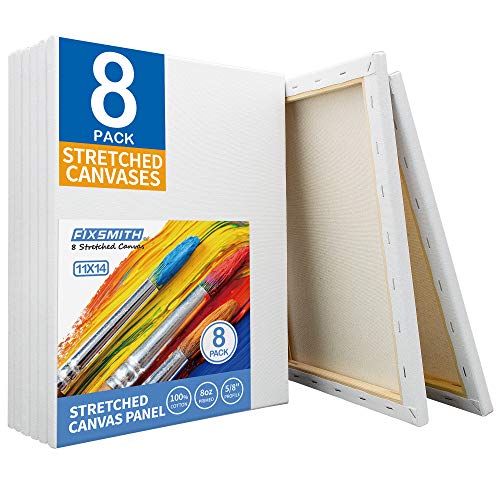
FIXSMITH offers a practical, budget-friendly option for oil and other media with its stretched white blank canvases. Each piece uses 100% cotton and is mounted on pinewood stretcher bars to deliver a firm, durable frame that resists warping. The canvases are pre-primed with a triple layer of acrylic gesso, designed to accept oil and acrylic paints with minimal cracking. This value pack covers 11×14 inch works and can be expanded for larger studies by pairing with frames. The combination of cotton quality and sturdy construction makes these ideal for beginners and seasoned painters who want reliable basics.
Beyond start-to-finish painting, these canvases support quick studies and plein-air experiments, thanks to their sturdy build and consistent surface. The pinewood frame offers dependable edge integrity for framing or hanging without additional reinforcement. While more affordable than premium linen options, FIXSMITH canvases still deliver dependable paint grip, color hold, and surface stability, supporting a wide range of brushwork from broad sweeps to precise detailing without excessive texture loss.
ESRICH 18×24 Large Canvas Set

ESRICH’s 18×24 inch canvases come as a 5-pack of primed, acid-free cotton blanks, offering a larger format ideal for ambitious studies, workshops, or group painting sessions. Each canvas is pre-coated with an 8-ounce layer of acid-free acrylic gesso, ensuring a stable painting ground that resists cracking and accepts oils, watercolors, acrylics, gouache, and tempera. The cotton surface provides a balanced texture that supports bold color transitions and smooth blends, while the larger size fosters more expansive compositions without frequent re-sourcing.
The 18×24 format is well-suited for developing technique across multiple sessions, as the larger surface accommodates more complex compositions and valuable practice in composition and color harmony. ESRICH emphasizes ease of use for daily practice, making these canvases a sensible choice for studios, teaching settings, and painting parties where participants explore oil and mixed-media techniques on a shared, uniform surface.
Gotideal 14-Piece Canvas Set

The Gotideal canvas set provides a comprehensive starter and practice collection, featuring 14 pre-stretched canvases in a range of small to mid sizes, including 4×4, 4×6, 5×7, 8×10, 9×12, and 11×14. Made from 100% cotton with a medium grain, these canvases are pre-primed with acid-free gesso and nailed firmly to wood frames to resist deformation. This makes them suitable for oils, acrylics, and other paints while keeping edges clean for framing. The diverse size spread supports quick exercises, still-life studies, and beginner-friendly projects, making it a popular gift option for artists and students alike.
For learners and hobbyists, Gotideal’s set provides reliable layers of color with minimal surface preparation, allowing artists to focus on technique rather than surface preparation. The pack’s breadth supports experimental layouts, scaled studies, and incremental skill-building. While not a luxury option, the included sizes cover a broad spectrum of painting tasks, and the durable construction ensures longevity for budding studios, classrooms, or weekend painting sessions with family and friends.
Buying Guide
Surface Material: Linen vs Cotton
Linen surfaces, especially oil-primed linen, offer a tight weave and a refined texture that can yield crisper edges and enhanced color saturation. They’re often favored by professionals for portraits and detailed work. Cotton canvases are softer, more budget-friendly, and widely available in various primed states. For oil painting, primed cotton (as in the KEFF and FIXSMITH options) provides an excellent balance of cost, workability, and durability, making it ideal for practice, studies, and longer projects. If archival longevity and a premium surface are priorities, linen panels (like Centurion) are worth the investment.
Priming and Longevity
Priming preserves the surface and reduces oil absorption. Triple-primed surfaces, like those on many FIXSMITH and KEFF pieces, offer solid foundation for multiple layers and glazes. Linen and cotton primed surfaces with acid-free gesso help prevent yellowing and cracking over time. For archival projects or gallery pieces, consider surfaces described as oil-primed or with enhanced priming (OP), which helps retain color accuracy and longevity. Always check whether the priming is acid-free and compatible with your chosen painting medium.
Size and Format: Stretched vs Panels
Stretched canvases are ready to paint and easy to frame, but linen panels provide a rigid alternative with less flex. Panels like Centurion Linen Panels are excellent for portable setups and studies, while stretched canvases (e.g., FIXSMITH, GOTIDEAL, ESRICH, and KEFF options) support traditional painting techniques and framing. Large formats (18×24 and up) enable broad strokes and composition exploration, whereas smaller surfaces are ideal for practice, color mixing, and studies of detail. A mix of sizes lets you switch between quick studies and more ambitious pieces without switching surfaces.
Budget and Value
Value packs like KEFF’s 24-pack and FIXSMITH’s 8-pack offer cost-effective ways to stock multiple surfaces for ongoing projects and classes. Multi-size sets provide flexibility without the need for purchasing individual sheets repeatedly. For professionals or serious students, investing in higher-end linen panels may be justified by improved longevity and texture. Always balance cost with your intended use: quick studies and practice can thrive on cotton primed canvases, while finals-grade work may benefit from linen surfaces with premium priming.
Care, Storage, and Handling
Proper handling and storage preserve surface integrity. Store canvases flat or upright to prevent warping, keep them away from extreme humidity, and protect them from dust and direct sunlight. After painting, allow adequate drying time to prevent smudging, particularly with oil paints. When framing, ensure the canvas tension remains even to avoid edge cracking. Clean tools promptly; use appropriate solvents or cleaners for oil paints, and avoid sanding primed surfaces aggressively, which can damage the primer and texture.
In summary, the best canvas for oil painting depends on your needs: whether you prioritize archival longevity, texture, cost, or portability. Linen surfaces deliver premium texture and durability for professional work, while cotton canvases provide a practical, versatile option for learning, experimentation, and rapid project turnaround. A mixed approach—combining a premium surface for final pieces with reliable practice canvases for studies—often yields the most balanced painting workflow.