
Watercolor painting benefits from surfaces that absorb and diffuse color evenly. This guide reviews five canvas options that perform well with water-based media, including stretched canvases, canvas boards, and watercolor pads. Each option balances absorbency, texture, and stability to support clean lifts, color blooms, and durable works. Whether you’re a beginner or a seasoned artist, the right canvas can elevate watercolor technique. Below is a quick product snapshot to compare core features and formats.
| Product | Type | Size/Pack | Notable Benefit |
|---|---|---|---|
| PHOENIX Watercolor Stretched Canvases | Stretched Canvas | 10×10 in, 4 pack | 100% cotton; triple primed |
| PHOENIX Watercolor Canvas Boards | Canvas Boards | 9×12 in, 6 pack | New blending formula; paper-like texture |
| ESRICH Canvas Boards | Canvas Boards | 8×10 in, 5 pack | Pure cotton; acid-free primer |
| KEFF Canvas Set | Canvas Boards | Multiple sizes; 24 pieces | Versatile multi-size pack |
| Fredrix Watercolor Pad | Canvas Pad | 9×12 in | Double-primed; archival quality |
PHOENIX 10×10 Watercolor Canvases (4 Pack)

These canvases are 100% cotton with a fine texture, delivering high water absorption and even diffusion for watercolor, gouache, tempera, and acrylic. The surface accepts lifts and corrections and stays stable across dimensions, making them a solid stand‑in for traditional watercolor paper when you want a bigger surface. The 10×10 inch size in a four‑pack is ideal for practice studies, color tests, and small compositions. They carry AP and CE certifications, making them safe for classrooms or studios.
A pinewood stretcher frame keeps the panel taut, with mortise and tenon joints ensuring the edges stay firm. The canvases are stretched tightly and back stapled to create clean edges, so they’re ready to frame. The 3/4 inch profile adds presence to finished pieces, while the triple primed gesso provides a receptive surface for water-based paints and easy correction when needed.
PHOENIX 9×12 Watercolor Canvas Boards

PHOENIX Watercolor Canvas Boards deliver a cotton surface with a medium texture, offering a paper-like experience that blends color with good diffusion. The surface holds paints well without excessive bleeding, and the back MDF board helps keep the board flat during wet washes. An updated ground formula improves blending and enables lifting to adjust edges, making corrections easier. The primer allows painting without tearing the surface, and the flat back prevents warping even after substantial water use. These boards are a practical option for watercolor, gouache, and acrylic work.
An MDF back keeps the boards rigid, while the surface texture supports smooth washes and natural color blooms. The canvas primer on the boards permits lifting and adjustments, so artists can refine edges without redrawing. The combination of cotton, medium texture, and flat backing makes these boards a reliable choice for portable watercolor sessions and studio work alike.
ESRICH 8×10 Canvas Boards (5 Pack)

These 8×10 canvas boards come in a five-pack, offering a value option for beginners and classrooms. They use pure cotton on the surface, delivering a smooth hold for paints and clean color diffusion suitable for watercolor, acrylic, oil, gouache, and tempera. A safe, non-toxic primer coats the surface, and the interior core is a sturdy board that resists deformation. The blank canvases are ready to paint and provide a dependable foundation for mixed-media experiments or student projects.
Each board’s board core and primer are designed to stay flat under moisture. The cotton surface holds color with minimal warping, and the acid-free primer keeps colors bright over time. This makes ESRICH boards a practical option for practice, class assignments, and personal projects across media.)
KEFF 24-Pack Canvas Set (Multi-Size)
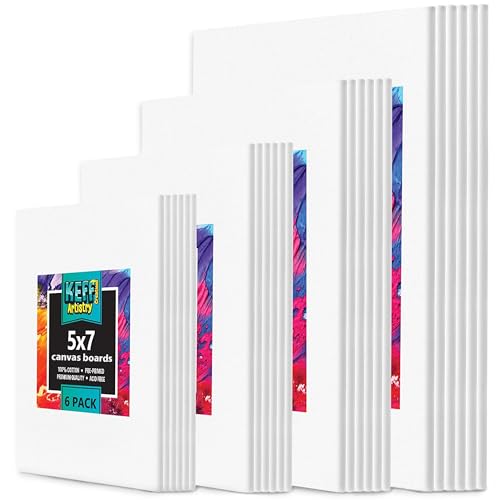
KEFF’s 24-pack includes six canvases in four sizes—5×7, 8×10, 9×12, and 11×14—providing a versatile range for studies, series, or class projects. Each canvas is triple-primed and crafted for use with acrylics, oils, watercolor, or tempera. The diverse sizes fit easily into standard frames and offer a consistent painting surface across formats. This set is well suited for students, teachers, or artists building a mixed-media notebook of experiments and practice pieces.
Durable paint canvases for painting resist warping and maintain color payoff across sizes. The multi-size approach supports quick studies, larger explorations, and collaborative projects, making it a practical addition to any art room or home studio. The triple-primed surface provides a receptive ground for multiple media and expressive techniques.
Fredrix Watercolor Pad 9×12

These archival-quality canvas sheets are double-primed just north of Atlanta, Georgia, with an acid-free acrylic titanium gesso. They are versatile for watercolors, watercolor sticks, acrylics, inks, paint markers, permanent markers, and spray paints. The surface will not tear like traditional paper, and you can lightly lift out pigment or wash it out without damaging the canvas beneath. The pad format combines portability with the texture and durability of canvas, ideal for practice, demonstrations, or on-the-go painting sessions.
Because the sheets are canvas rather than paper, you can lift pigment or wash out without damaging the surface. This makes the pad a durable option for practicing large washes, working on compositional studies, or finishing pieces where you want the tactile feel of canvas in a portable format.
Buying Guide
Choosing the right watercolor canvas depends on your technique, workflow, and workspace. Consider surface type and texture, priming, and backing materials; absorption characteristics; and how you plan to frame or display the piece.
- Surface type: Stretched canvases deliver a traditional canvas feel and are frame-ready, while canvas boards offer rigidity and flatness without framing. Watercolor pads provide portability and can be ideal for studies and field work.
- Texture and absorption: Fine to medium textures affect how pigments diffuse and lift. A ground designed for water-based paints should balance absorption with diffusion to prevent muddy washes.
- Priming: Primed surfaces (gesso or acrylic primer) improve paint lift, correction, and color bloom. Unprimed areas may absorb more pigment, changing color intensity and edge control.
- Backing and stability: MDF or plywood backings help keep boards flat, while stretched canvases rely on sturdy frames to resist warping and sagging when wet.
- Size and value: Multi-size packs are cost-efficient for learners and studios, but dedicated large or small formats suit specific projects or display needs.
- Media compatibility: While all options accommodate watercolor, consider whether you also work with gouache, acrylic, or tempera to choose a compatible primer and surface.
- Durability and longevity: For archival-quality work, select surfaces with stable priming and cotton or high-quality cotton blend substrates to minimize deterioration over time.
- Accessibility and workflow: Portability (pads) can be advantageous for field studies, while ready-to-frame canvases save setup time in a studio.
Comparison Snapshot
Stretched canvases tend to offer the easiest route to gallery presentation and wall display, with a traditional look and feel. Canvas boards provide flatness and durability that reduce the risk of warping when using water-heavy washes. Watercolor pads offer portability and ease of lifting versus heavier surfaces, making them ideal for on-location studies or practice sessions. For blending and correction, primed surfaces with a writable undercoating generally perform best across many media. Price and pack size vary by brand, but multi-piece sets often deliver the best value for ongoing practice and mixed-media exploration.