
Choosing the right chipboard is essential for durable, professional-looking book covers, boxes, and craft projects. Chipboard varies by thickness, size, and material quality, affecting rigidity, glue adhesion, and long-term performance. For American crafters and small studios, letter-size (8.5 x 11 in) and larger sheets in kraft stock are common, offering sturdy backing without excessive weight. This guide highlights five dependable options, spanning lightweight to heavy-duty boards, so you can match thickness and dimensions to your project. All sheets are kraft-based, chosen for rigidity and ease of handling. Use the table below to compare key specs at a glance.
| Product | Brand | Size | Thickness | Pack |
|---|---|---|---|---|
| LOTMER 50 Pack 8.5×11 Chipboard Sheets | LOTMER | 8.5 x 11 in | 50 pt | 50 sheets |
| JNENERY 20Pcs 12.5×10 80pt Book Board | JNENERY | 12.5 x 10 in | 80 pt | 20 sheets |
| JNENERY 10 Chipboard Sheets 8.5×11 22pt | JNENERY | 8.5 x 11 in | 22 pt | 10 sheets |
| Lineco Neutral pH Binder Board 100 PT | Lineco | 15 x 20.5 in | 100 pt | 4 sheets |
| BBTO 20 Pcs 8.5×11 50 Pt Chipboard | BBTO | 8.5 x 11 in | 50 pt | 20 sheets |
For best results, match board thickness to your project scope: lighter boards suit simple covers and crafts, while extra-thick boards provide rigid backing for bulky volumes or archival storage. Consider sheet size relative to your project dimensions and the ability of your tools to score, cut, and glue the material cleanly. The following five selections balance accessibility, durability, and versatility for typical bookbinding tasks in American studios and classrooms.
LOTMER 50 Pack 8.5×11 Chipboard Sheets

The LOTMER kit offers a value-packed set of 50 sheets, each measuring 8.5 x 11 inches and 50 pt thick. The kraft chipboard is rigid, flat, and designed to resist warping under glue and coatings, making it suitable for heavy-duty book covers, archival storage boxes, and reinforced cases. The smooth surface eases glue uptake and finishing, while the kraft composition provides a sturdy backbone for complex paper crafts. This option is ideal for classrooms, studios, and hobbyists who frequently produce multiple bound pieces or need spare covers for ongoing projects.
JNENERY 20Pcs 12.5×10 80pt Book Board
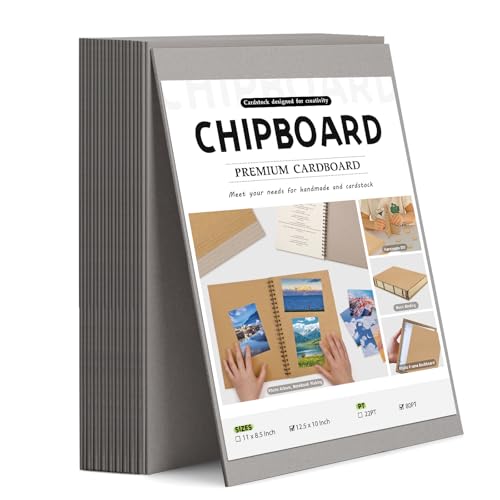
This JNENERY set delivers heavy-duty performance with 80 pt thick boards sized 12.5 x 10 inches. The kraft surface is smooth and free from burrs, supporting clean cuts and reliable gluing. A high load-bearing capacity means the panels resist bending even under stacked payloads, making them well-suited for front-and-back covers, protective boxes, and packaging that needs robust structure. These boards are a practical choice for artisans working large-format projects or those who need substantial rigidity without resorting to alternative materials.
JNENERY 10 Chipboard Sheets 8.5×11 22pt
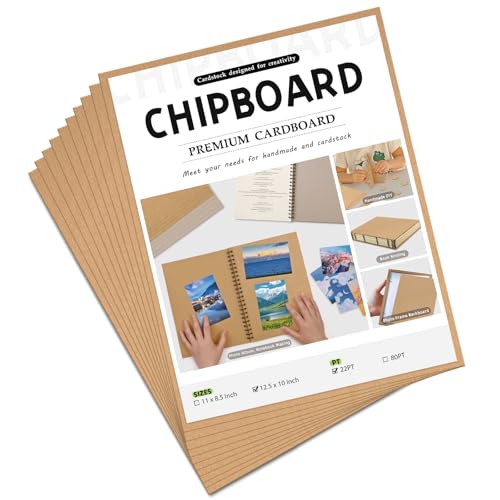
This 10-pack from JNENERY offers 8.5 x 11 inch sheets at 22 pt thickness—an approachable mid-range option. The kraft board maintains a flat, smooth finish suitable for gluing, painting, and decorative treatments. While thinner than the 80 pt option, these sheets still provide dependable support for lighter bookbinding tasks, pamphlet covers, and craft projects requiring flexible yet sturdy backing. The material holds up well with repeated use and simple storage, making it a sensible choice for beginners or budget-friendly iterations.
BBTO 20 Pcs 8.5×11 50 Pt Chipboard

BBTO presents a practical 20-sheet bundle of 50 pt boards in the familiar 8.5 x 11 inch size. The kraft-based card stock is flat and sturdy, with a smooth touch that accepts glue and paint evenly. These sheets offer solid bearing capacity for cover creation, small boxes, and craft projects where cost efficiency matters. The 50-point thickness gives a reliable backbone for lined notebooks, card boxes, and basic bookbinding experiments, while remaining manageable for quick-turn tasks and classroom activities.
Buying Guide
When selecting chipboard for bookbinding, consider thickness, material quality, size, and how you will handle and store the boards. Thicker sheets provide more rigidity, but heavier boards require sturdier machinery and careful handling. Neutral pH and archival-grade options help preserve documents and artwork over time. Size should align with your project dimensions and your tooling. Finally, evaluate price per sheet to ensure you’re getting durable value for your typical workload.
Thickness And Project Rigidity
Thickness directly affects cover stiffness and the ability to resist warping. Lightweight 22–28 pt boards suit pamphlets and small crafts, while 50–80 pt boards give substantial rigidity for durable covers and boxes. 100 pt boards, like the Lineco option, deliver maximum rigidity for oversized projects or archival storage. For most hobbyist bookbinding, a mix of mid-range thickness (40–80 pt) covers a wide range of applications without excessive weight.
Material Quality And Archival Value
Kraft-based chipboard is common for bookbinding due to strength and affordability, but consider whether you need acid-free or neutral pH materials for long-term preservation. Acid-free or neutral pH boards reduce yellowing and degradation of papers and inks over decades. Brand provenance can be a reliable signal; Lineco, as shown above, emphasizes archival-grade backing suitable for framing and book covers.
Size, Pack, And Workflow
Choose sheet size that matches your typical project.8.5 x 11 inches is the standard for letter-size projects, but larger forms like 12 x 12 or 15 x 20.5 inches are beneficial for bigger covers and boxes. Pack quantity matters for ongoing workflows; larger packs lower the per-sheet cost and reduce downtime between projects. Consider whether you need spare sheets for prototyping and expansive covers.
Workability: Gluing, Cutting, And Finishing
Flatness and surface smoothness affect glue adhesion and finishes. Smooth, burr-free surfaces glue evenly and take paint, markers, or paper coatings reliably. Some boards are easier to cut and score, reducing the risk of tearing. If you work with fine details or intricate bindings, prioritize boards noted for flatness and consistent thickness.
Storage, Handling, And Long-Term Care
Store boards flat in a dry environment away from direct sunlight to prevent warping or discoloration. Heavier boards should be supported and not stacked too high to avoid cracking or edge damage. When transporting, keep boards in protective sleeves or between rigid sheets to protect edges. Proper storage helps maintain edge integrity and prolongs usable life across projects.
Price And Value
Evaluate cost per sheet by dividing the package price by the number of sheets and by the thickness. In many cases, paying a bit more for thicker, archival-grade boards yields better long-term results and fewer replacements. For classes and studios, bulk packs can significantly reduce per-project costs while offering consistent quality.
Quick Comparison Snapshot
| Feature | LOTMER | JNENERY 80pt | JNENERY 22pt | Lineco 100 pt | BBTO 50 pt |
|---|---|---|---|---|---|
| Size options | 8.5 x 11 in | 12.5 x 10 in | 8.5 x 11 in | 15 x 20.5 in | 8.5 x 11 in |
| Thickness (pt) | 50 | 80 | 22 | 100 | 50 |
| Typical use | Light to heavy covers | Heavy-duty covers, boxes | Mid-range projects | Archival backing, framing | Standard covers, craft boxes |