
Sewing and fabric work demand a reliable cutting mat that protects your table, preserves blades, and provides precise, multi-directional guides. The right mat helps you cut accurately, stack fabrics safely, and extend blade life. This guide highlights five top picks that balance durability, usability, and value, with options for large-scale projects and compact setups alike. Each mat supports rotary cutters and straight blades, and many offer layered construction for longer tool life. Read on to compare features, sizes, and practical considerations before choosing the mat that best fits your sewing space.
Below is a quick snapshot of the five mats selected for this guide, highlighting size, brand, and a key benefit for sewing and crafting applications.
| Product | Brand | Size | Key Benefit |
|---|---|---|---|
| Idemeet Density-Upgraded 24″x36″ Mat | Idemeet | 24″ x 36″ | High density, durable buffer layers for long life |
| Fiskars 24″x36″ Cutting Mat | Fiskars | 24″ x 36″ | Clear grid lines and bias lines for easy angle cuts |
| Ecraft 24″x36″ Large Mat | ecraft | ≈24″ x 36″ | Double-sided with clear metric and inch grids |
| WORKLION 24″x36″ Large Mat | WORKLION | 24″ x 36″ | Soft PVC surface with multi-size options |
| Anezus 12″x18″ Self-Healing Mat | Anezus | 12″ x 18″ | Compact, portable and blade-friendly |
Idemeet 24×36 Density-Upgraded Self-Healing Mat

The Idemeet density-upgraded mat is a large 24×36 inch cutting surface designed for serious sewing and crafts. With a weight near 2600 grams, it remains stable during multi-layer cuts, reducing shifting that can ruin precise measurements. The mat uses a five-layer PVC construction, featuring a white core to resist deep cuts and help resist blade penetration. This setup provides dependable self-healing across frequent cuts with rotary blades and straight blades, helping keep workspaces clean and blades sharp over time. It’s well suited for quilts, garment work, scrapbooking, and general fabric projects that benefit from a generous cutting field.
Durability is enhanced by premium buffer layers under the self-healing surface, which cushion blades and help prevent rapid wear. The interlayer design offers robust blade support, reducing the risk of gouges that can foul future cuts. While the product emphasizes blade protection and surface longevity, it remains a practical choice for large sewing projects that require consistent, long-lasting performance on a single mat.
Fiskars 24×36 Self-Healing Cutting Mat

Fiskars’ 24×36 cutting mat is a staple for sewing rooms that prioritize precise fabric handling. The oversized surface accommodates full-width fabric cutting and accommodates elaborate quilting layouts. It features clear measuring grids and bias lines at 30, 45, and 60 degrees to simplify angled cuts. The self-healing surface is designed to outlast many mats, helping preserve ruler edges and blades. This mat pairs well with Fiskars rotary cutters, offering a smooth cutting experience and reliable long-term performance for garments, quilting projects, and scrapbooking tasks that demand exact measurements.
Beyond the grids, Fiskars emphasizes durability and ease of use. The cut-resistant surface remains even after repeated passes, contributing to accurate outcomes across multiple layers. While large surfaces are a standout, this mat’s grid clarity and angular guides make it a strong choice for sewists who routinely perform precise layout work, such as bias cut bindings or stripe matching on garments.
Ecraft 24×36 Large Self-Healing Cutting Mat

The Ecraft 24×36 mat is a robust, double-sided option designed for versatile sewing and craft work. The double-sided construction allows users to access metric and inch grids on different faces, making it easier to switch between projects or measurement systems. The mat’s dimensions translate into a spacious cutting field, suitable for wide fabrics, quilts, and large project panels. The surface uses a five-ply composition to provide durability, impact resistance, and extended life through repeated blade passes, while protecting work surfaces from nicks and gouges.
In addition to gridlines and angle indicators, the mat is designed for easy maintenance and long-term use. The combination of soft surface material and a firm core offers a reliable cutting experience, with lines that remain readable after years of use. For sewists and crafters who require an expansive, dependable mat with clear measurement cues, this Ecraft model is a solid fit for home studios and small workshops alike.
WORKLION 24×36 Large Self-Healing Mat
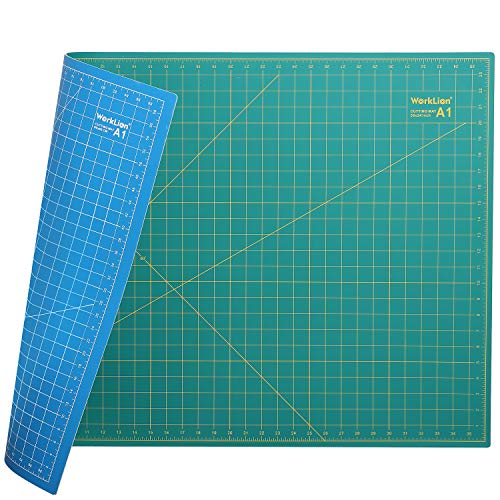
WORKLION’s 24×36 cutting mat emphasizes protection and versatility for heavy-duty cutting tasks. The mat uses a five-layer PVC construction with a white core that helps resist deep cuts, effectively blocking blade penetration and extending the mat’s lifespan. It’s compatible with rotary cutters and straight blades, making it suitable for a range of sewing, quilting, and scrapbooking activities. The mat’s surface is designed to absorb impact from blades while maintaining a smooth cutting experience, which helps prevent snagging on fabric and reduces blade dulling over time.
As a broad-surface option, this mat can serve as a desktop protector in classrooms, studios, or home workspaces. It’s available in multiple sizes, and the large 24×36 format is particularly popular among sewists who regularly work with wide fabrics or multi-panel garments. For users seeking a durable, value-oriented mat that can handle frequent cutting, this WORKLION model is worth considering.
Anezus 12×18 Self-Healing Cutting Mat

The Aneuzs mat offers a compact cutting surface at 12×18 inches, ideal for smaller sewing tasks, hobby projects, or portable setups. The five-ply construction and self-healing surface cushion blades, helping to prolong blade life while preserving a smooth cutting surface. Its smaller footprint makes it highly portable, suitable for on-the-go sewing, crafting in tight spaces, or adding a dedicated mat to a compact workstation. While not as expansive as larger mats, this model provides dependable performance for everyday fabric cutting and light-duty crafting.
Designed to be compatible with rotary cutters and straight blades, the Anezus mat balances portability with necessary blade protection. The white core helps resist deeper cuts, while the surface remains forgiving for multi-layer projects in small batches. For quilters or hobbyists working in limited spaces, this mat provides a practical, budget-friendly option without compromising essential self-healing properties.
Buying Guide
Choosing the right cutting mat for sewing involves balancing size, durability, and features against the scope of your projects. Here are key purchase considerations and how to compare options:
- Size and cutting space: Larger mats (24×36 inches and up) are ideal for full-width fabrics, quilting panels, and multi-piece garments. Smaller mats excel in compact studios or for portable workstations where space is at a premium.
- Material and construction: Five-layer PVC mats offer good blade protection and self-healing. Some mats include a dense core (2600 g or similar) for stability and extended life. Others emphasize dual-surface or dual-grid layouts for versatility.
- Gridlines and measurement aids: Look for clear inch and metric grids, plus bias lines at standard angles (30/45/60 degrees). Angled guides help with accurate fabric cutting, pattern alignment, and quilting layouts.
- Blade protection and durability: A quality mat should resist deep cuts, provide blade cushioning, and prevent blade dulling. Interlayers and buffer layers contribute to longer life and smooth cutting experiences.
- Double-sided options: Some mats offer double-sided grids or scales, increasing flexibility for different projects or measurement systems. Consider whether you need both faces for your workflows.
- Portability and storage: If space is limited or you travel to classes, lightweight or thinner mats may be preferable. Keep mats away from direct heat sources to preserve self-healing properties over time.
- Maintenance and care: Clean with a damp cloth, avoid harsh chemicals, and store flat to prevent warping. A mat with a durable surface is easier to maintain and keeps lines readable longer.
- Value and longevity: Larger, higher-density mats often cost more upfront but can offer better blade life and cutting accuracy, making them economical over time for frequent use.
- Safety and compatibility: Ensure your mat supports the cutters you own. Most mats work with standard 45mm rotary cutters, but check blade width compatibility if you rely on specialized tools.
When evaluating options, consider your typical projects: garment sewing, quilting, scrapbooking, or crafts that involve multiple layers. A larger mat with clear grids is advantageous for cutting wide fabric widths and aligning patterns, while a more compact mat suits portable studios or hobby work. A high-quality mat is an investment in blade life, surface protection, and precise results—choose one that aligns with your most frequent sewing tasks and workspace constraints.