
Choosing the right fabric for sound absorption starts with understanding how porous materials interact with sound waves. Fabric-wrapped panels trap and diffuse reflections, improving intelligibility in studios, home theaters, offices, and living spaces. This guide highlights five fabric-based products that blend effective acoustics with practical installation. From self-adhesive wall panels to DIY fabric options, these solutions help reduce reverberation, control echoes, and create more comfortable rooms without sacrificing style.
To help you compare quickly, here is a snapshot of the chosen products and their core strengths. The table focuses on usage, installation, and key performance cues to guide selection for various room types.
| Product | Brand | Key Feature | Size / Specs |
|---|---|---|---|
| BUBOS Fabric Acoustic Panels | BUBOS | Self-adhesive, fabric-wrapped, 150–20000 Hz absorption | 23.6″ x 11.8″ (panel) |
| BUBOS Fabric Acoustic Panels (2″ Thick) | BUBOS | Self-adhesive, thicker panel for deeper absorption | 23.6″ x 11.8″ x 2″ |
| SoundAssured Acoustical Fabric | SoundAssured | Acoustically transparent fabric for DIY panels | 59″ x 36″ pieces (sold by the yard) |
| Olanglab Fiberglass Acoustic Panels | Olanglab | High-density fiberglass core; NRC ~0.9; fabric-wrapped | 11.8″ x 23.6″ per panel; 4-pack |
| Amantech 4 Pack Fabric Panels | Amantech | 2″ thick; peel-and-stick backing; fiberglass core | 24″ x 12″ x 2″ per panel |
BUBOS Fabric Acoustic Panels

These fabric panels are designed to reduce reverberation, diffusion, and echo across a broad frequency band, with absorption specified in the mid-to-high range (150–20,000 Hz). Wrapped in 100% polyester fabric and backed by a polyester inner layer, they emphasize a green material approach while delivering dependable sound control. The self-adhesive backing enables simple, tool-free installation on walls, which is especially advantageous for renters or rapid room acoustic upgrades. The panels are suited for studios, home theaters, and office spaces where wall-mounted acoustic treatment is desired without a heavy construction process.
In practice, the panels help smooth out room reflections by absorbing energy that would otherwise bounce between walls. They can be installed in clusters along larger wall surfaces or used to treat specific reflection points. The grey fabric finish provides a neutral aesthetic that blends with contemporary decors, reducing visual distraction while delivering measurable improvements in room acoustics. For best results, place them at first reflection points and mix panel density to balance absorption across frequencies.
BUBOS Fabric Acoustic Panels (2 Inch Thick)

The 2″ thick version builds upon the standard panels with increased density, which can enhance low-to-mid frequency absorption and improve overall sound containment in medium-sized rooms. The reinforced fabric wrapping, self-adhesive backing, and green material approach contribute to a durable, long-term solution that can be arranged in arrays to cover larger wall expanses. This option is well-suited for home studios, podcast rooms, or small theaters where occupants want clearer dialogue and reduced ambience without deep structural modifications.
With a similar design language to the thinner variant, these panels emphasize installation flexibility and quick deployment. They pair well with other treatments to shape a room’s acoustic character, particularly when combined with oriented diffusion elements or bass traps in corners. The 150–20,000 Hz absorption range remains applicable, making them effective across vocal and instrument-focused applications while remaining aesthetically versatile in a living or working space.
SoundAssured Acoustical Fabric

SoundAssured offers acoustical fabric designed for DIY sound panels. This fabric is acoustically transparent, meaning it allows sound waves to pass through so the internal absorber can do the heavy lifting. The material is described as durable and visually appealing, with a finish that remains comfortable for long-term indoor use. Sold by the yard (59″ x 36″ pieces), it enables owners to create custom-wrapped panels or to upholster existing frames. It’s particularly popular for hobbyists and professionals who want to tailor panel size, shape, and aesthetic to a specific space or project.
For DIY enthusiasts, this fabric provides a reliable, easy-to-work-with option that aligns with a wide range of core materials (including fiberglass or mineral wool). Its acoustical transparency helps preserve the intended absorption characteristics of the chosen core, while the fabric color and texture can help a room achieve the desired look. Because it’s sold by the yard, you can segment a material purchase to fit exact panel counts and dimensions, minimizing waste and cost.
Olanglab Fiberglass Acoustic Panels

These Olanglab panels use a high-density fiberglass core wrapped in fabric, providing robust sound absorption with an NRC rating around 0.9. The 1.6″ thickness offers a stronger barrier against echoes and room reverberation, making them suitable for larger studios, home theaters, and busy office spaces. The 4-pack configuration supports broad wall coverage or strategic placement around key reflection points. The fabric-wrapped design helps with aesthetics while maintaining performance, enabling rooms to maintain a crisp, intelligible sound profile without intrusive visual elements.
In practice, the thicker profile and higher-density core translate to more effective treatment for mid-to-low frequencies compared with thinner panels. This makes them a compelling choice when the goal is to reduce overall ambience and improve speech clarity in multi-occupant spaces. The fabric finish assists with maintenance and can be selected to complement existing decor, which is beneficial when integrating acoustic treatment into living or work environments.
Amantech Fabric Acoustic Panels
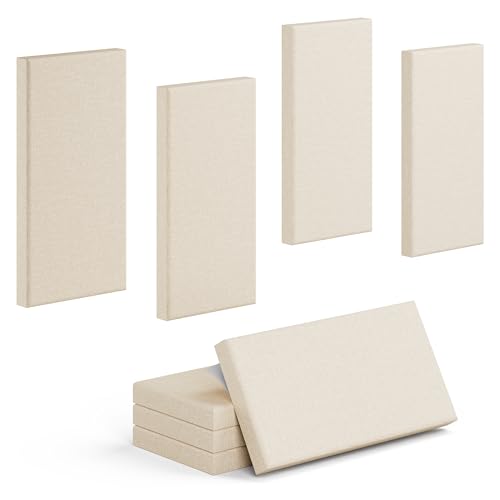
Amantech offers a four-pack of fabric-covered acoustic panels built around a high-density fiberglass core. The panels are 2″ thick, which provides stronger absorption for echo reduction and a quieter room ambience. A peel-and-stick backing simplifies installation, while the option to add additional adhesive or construction tape in the back area can improve long-term stability in high-traffic spaces. The material uses a 100% fiberglass core wrapped in polyester fabric, designed to minimize odors and maintain indoor air quality during use.
This option balances performance and ease of installation, making it a practical choice for rooms that require rapid acoustic improvement with a clean, modern look. The 24″ x 12″ panels are large enough to cover substantial areas while remaining flexible for layout patterns. When deployed in clusters, these panels deliver noticeable reductions in flutter echoes and overall reverb, contributing to clearer vocal reproduction and more controlled instrumental sound in studios or entertainment rooms.
Buying Guide
Panel Thickness And Acoustic Performance
Thicker panels generally deliver stronger absorption, especially at lower frequencies. For example, 2″ thick panels tend to outperform thinner options in medium to large rooms, reducing reverb more effectively and aiding speech clarity. NRC ratings (where provided) help quantify performance; panels with higher NRC values absorb more sound energy. When possible, pair thicker panels with adjacent thinner panels to balance absorption across the frequency spectrum and avoid a dull, overly damped room.
Fabric Type And Acoustic Transparency
Fabric-wrapped panels rely on a core absorber (often fiberglass or mineral wool) behind a fabric skin. Some fabrics are designed to be acoustically transparent to minimize interference with the core’s performance. DIY fabrics—like acoustical fabrics sold by the yard—give you flexibility to wrap existing frames while preserving the interior’s absorption characteristics. For spaces needing visually discreet treatment, choose neutral or complementary fabrics that blend with the room’s decor.
Installation Methods And Room Flexibility
Self-adhesive panels offer quick, tool-free installation, which is ideal for renters or rapid room upgrades. However, they may have limited long-term hold in high-humidity environments or on textured surfaces. For permanent installations, consider mechanical mounting options or combining adhesives with screws, mounting rails, or studs. When planning layout, position panels at primary reflection points first, then fill larger areas with additional panels to achieve uniform absorption.
Panel Size, Coverage, And Room Type
Panel dimensions influence how many units you’ll need to achieve desired coverage. Large panels cover more area quickly but may be harder to fit around irregular walls. In smaller rooms or studios, a mix of panels with varying sizes can create a balanced acoustic field. Consider room use: speech-dominant rooms benefit from higher absorption across the mid-high range, while music-focused rooms may require broader frequency treatment, including bass management via corner traps or thicker panels.
Durability, Maintenance, And Aesthetics
Fabric-wrapped panels typically require minimal maintenance—dust with a microfiber cloth or soft brush. Fabric choice matters not only for aesthetics but also for durability and odor control; look for polyester or other synthetic fabrics designed for indoor use. The color and texture should harmonize with interior design while remaining unobtrusive. For spaces with frequent rearrangements, lightweight, self-adhesive panels can be moved and re-positioned as needed to re-tune acoustics with changing layouts.
Value And Long-Term Considerations
Consider the total area to treat, the number of panels required, and the overall cost relative to room size. High-density cores with thicker profiles deliver stronger absorption but may cost more upfront. DIY fabric options offer cost savings and customization but require more time to install and ensure proper coverage. A balanced approach—combining off-the-shelf fabric panels with acoustical fabric for DIY projects—can optimize performance while maintaining aesthetic flexibility.