
Flexible 3D filaments such as TPU combine elasticity, resilience, and comfort for a wide range of projects—from wearable tech and protective gear to soft prototypes and flexible components. This guide spotlights five top options that balance print reliability, softness, and impact resistance on common desktop printers. Each entry includes a quick spec snapshot and practical printing notes to help makers compare performance and select the best filament for their needs.
| Product | Brand | Filament Type | Shore | Spool |
|---|---|---|---|---|
| Siraya Tech Flex TPU Air | Siraya Tech | TPU Filament | 65A-82A | 1 kg |
| Geeetech TPU Filament | Geeetech | TPU Filament | 95A | 1 kg |
| SUNLU TPU Filament | SUNLU | TPU Filament | 95A | 1 kg |
| OVERTURE TPU Filament | OVERTURE | TPU Filament | 95A | 1 kg |
| Comgrow TPU Filament | Comgrow | TPU Filament | 95A | 1 kg |
Siraya Tech TPU Air: Adjustable Hardness Filament

Siraya Tech Flex TPU Air enables dynamic control of hardness from 65A to 82A by adjusting the printing temperature. Lower temps yield tougher, durable parts, while higher temps activate foaming for a lighter, softer feel. The active foaming approach reduces weight by up to 50% without sacrificing elasticity, supporting lightweight yet tough parts for wearables, sports gear, and soft prototypes. The surface delivers a fabric-like texture ideal for direct skin contact, grips, and protective cases. Consider drying between prints to retain consistent performance.
Geeetech TPU Filament 95A: Elastic, Clog-Free
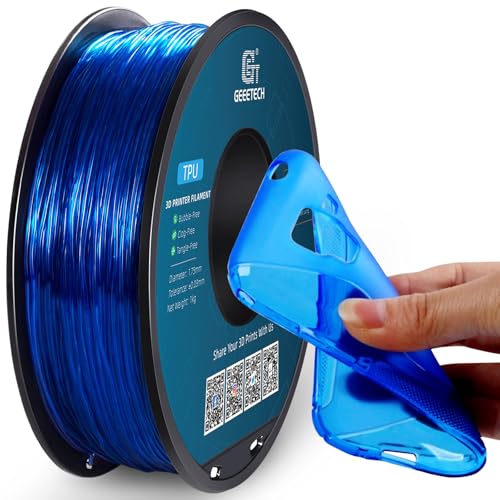
Geeetech TPU Filament offers a 95A hardness, delivering strong elasticity and wear resistance for items like phone cases, insoles, watch bands, robotics parts, and flexible toys. It features a patented clog-free formula and a 24-hour pre-drying process to minimize jams and bubbles from the source. The vacuum-sealed spool with desiccants supports long-term storage; after opening, store in a sealed container and dry at 65-70°C for 8+ hours if humidity is a concern. It provides strong layer adhesion and a smooth surface finish, reducing delamination and enhancing durability.
SUNLU TPU Filament 95A: Fast Printing

SUNLU’s TPU Filament is designed for fast printing, delivering up to three times the speed of ordinary TPU while maintaining softness and resilience. With a Shore hardness of 95A, it supports flexible applications, robotics parts, and wearables that require reliable impact resistance. The filament emphasizes excellent layer adhesion and a smooth finish, helping to achieve consistent, high-quality prints. This option suits projects where speed and durability must align without sacrificing flexibility.
OVERTURE TPU Filament 95A: Flexible And Durable

Overture TPU Filament uses a 95A TPU formulation to strike a balance between softness and resilience, making it well-suited for flexible designs, robotics, and fashion projects. It emphasizes excellent layer adhesion and a clog-free, bubble-free printing experience. Each spool is thoroughly dried for 24 hours before packaging and vacuum-sealed to maintain moisture control, contributing to consistent extrusion and fewer print defects.
Comgrow TPU Filament 95A: Flexible 1kg Black

Comgrow TPU Filament 1.75mm offers a 95A Shore hardness for flexible prints, with a standard 1kg spool designed for extended printing sessions. It provides good dimensional accuracy of about ±0.02 mm and compatibility with most FDM printers. The combination of softness and strength makes it suitable for everyday items requiring flexibility, such as grips, protective casings, and lightweight components.
Buying Guide
Choosing the right flexible filament depends on your printer setup, target applications, and printing workflow. The following considerations help buyers compare options across popular TPU filaments and make informed decisions about durability, ease of use, and print reliability.
- Filament hardness and texture: TPU filaments span a range from softer 65A to rigid 95A. Lower hardness yields more compliant parts, while higher hardness offers better shape retention and wear resistance. Some brands offer adjustable hardness via process controls (like foaming technologies) to tailor feel for wearables or protective gear.
- Print reliability and curing requirements: Look for features such as clog-free formulations, pre-drying steps, vacuum sealing, and moisture control. TPU is highly hygroscopic; drying and proper storage minimize bubbles, jams, and poor layer adhesion.
- Printer compatibility and setup: 1.75 mm is the most common diameter for desktop printers. Direct-drive extruders typically handle TPU more reliably than Bowden setups, especially for flexible blends or thicker infill.
- Spool size and material cost: Most TPU filaments come in 1 kg spools; some bundles offer multiple colors or shades. Consider how quickly you’ll go through filament and whether color variety is important to your projects.
- Drying and storage guidance: Many brands recommend drying filaments at 65-70°C for several hours after exposure to humidity. Vacuum-sealed bags and desiccants help maintain low moisture between prints.
- Recommended print settings: Start with nozzle temperatures around 210-230°C (adjust based on material) and bed temperatures around 40-60°C if supported. Print speeds for TPU typically range from 20-40 mm/s depending on printer and geometry; slower speeds reduce stringing and improve accuracy.
- Application fit: For wearables and skin-contact parts, surface texture and comfort are crucial. Filaments offering a fabric-like finish or foamed textures can enhance wearability and grip. For mechanical parts, ensure sufficient elasticity and recovery after deformation.
- Durability vs weight: Some innovations claim significant weight reduction through foaming or micro-structures. Evaluate whether weight savings align with your performance goals and whether any trade-offs in strength are acceptable for the end use.
Across the five featured filaments, users can expect reliable prints with strong layer adhesion, good surface finishes, and flexible behavior suitable for a wide range of projects—from protective cases to wearable prototypes. Always perform a small calibration print to dial in temperature, speed, and retraction if needed for your specific printer and nozzle size.