
Choosing the right glass cutter matters for stained glass projects, where clean, precise scores influence final results and reduce the risk of breakage. This guide highlights five top cutters and tool kits, focusing on oil-fed versus non-oil-fed systems, tungsten carbide wheels, ergonomic grips, and kit completeness for both beginners and professionals. The selections below balance accuracy, durability, and ease of use across common stained glass tasks, from score-and-break work to fine line scoring on thicker panes. Read on for focused tool profiles, practical buying tips, and a practical comparison to help match tools to your project needs.
| Product | Brand | Key Feature |
|---|---|---|
| B BLOOMOAK Carbide Glass Cutter | B BLOOMOAK | Lightweight with finger-stop; 2–20 mm range; pencil-style grip |
| Rizom Glass Cutting Tool Kit | Rizom | Comprehensive kit; multiple cutter heads; oil-feed system |
| IMT Pistol Grip Glass Cutter | IMT | Pistol grip; oil feed; 2–12 mm range; tungsten carbide wheel |
| Fletcher Terry Steel Wheel Cutter | Fletcher Terry | Die-cast handle; steel wheel; 130-degree wheel angle |
| Rustark Glass Cutter Kit | Rustark | 8-piece set with pliers; rubber tips; multiple cutter heads |
B BLOOMOAK Carbide Glass Cutter

This pencil-style cutter emphasizes a light-weight finger-stop design to reduce grip fatigue and improve control during long sessions. The cutting wheel is made from industrial-grade tungsten carbide, delivering durable performance and consistent scoring. With a cutting range of 5/64″ to 3/4″ (approximately 2–20 mm), it handles thick glass, mosaics, and tile work with reliable precision. The overall build is designed for stability, making it suitable for hobbyists and professional glaziers working on stained glass projects.
- Light-weight finger-stop design for secure grip and accuracy.
- Industrial-grade tungsten carbide wheel for long life and precise scoring.
- Versatile cutting range from 2 to 20 mm, suitable for glass, tile, and mirror work.
In practice, this cutter supports steady linear scores on varied densities, with a design that emphasizes comfort during extended use. It is particularly well-suited for projects requiring consistent line work on relatively thick or mosaic glass, where control and wheel longevity matter most. For beginners, the pencil shape helps mimic a pencil-and-paper feel, while experienced users will appreciate the wheel’s durability during repetitive cuts.
Rizom Glass Cutting Tool Kit

The Rizom kit is designed for comprehensive stained glass work, including 8″ glass tile nippers, 8″ running pliers, 6″ breaker grozer pliers, a glass cutter, and multiple heads. The kit also includes a replacement rubber tip set, an oil dropper, a cross screwdriver, hex wrench, and a pouch for organization. The tools are constructed from carbon steel with a pearl nickel finish for rust resistance and durability, and the cutting wheel is YG8 tungsten steel for smooth, efficient cuts. The ergonomic dual-color handle provides a slip-resistant grip for confident handling.
- Full accessory set with pliers, cutter heads, and maintenance items.
- YG8 tungsten steel cutting wheel for efficient cutting of glass, tile, and ceramics.
- Oil-dispensing cutting heads for smooth, consistent lubrication during use.
The Rizom system emphasizes versatility and speed, allowing users to switch between cutter heads for different glass thicknesses. It is particularly advantageous for stained glass projects that require multiple cut sizes and angles, making it a strong option for serious hobbyists and professional studios alike. While broad in scope, the kit’s hardware quality supports reliable performance across typical studio tasks and occasional field work.
IMT Pistol Grip Glass Cutter
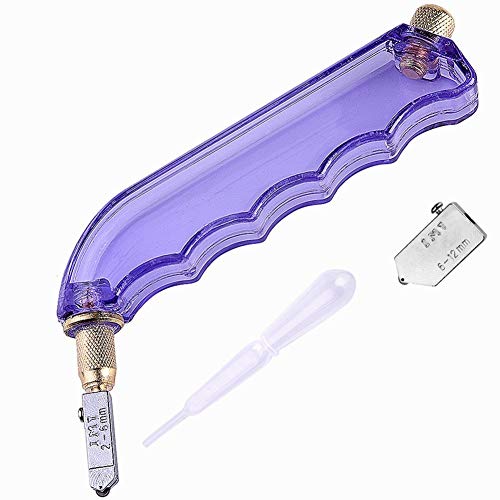
The IMT cutter features a practical pistol grip design that reduces wrist fatigue and enhances control during long scoring sessions. The wheel is tungsten carbide, contributing to a long cutting life, and the tool includes a refined oil feed system that automatically lubricates the blade as pressure is applied. With a 2 mm to 12 mm cutting range, this cutter supports a variety of glass thicknesses commonly encountered in stained glass work. The combination of ergonomic handling, robust wheel material, and an efficient oil system positions it as a reliable option for both hobbyists and professionals.
- Pistol grip design reduces wrist fatigue for comfortable use.
- Durable tungsten carbide wheel for extended cutting life.
- Automatic oil feed ensures consistent lubrication during scoring.
In practice, the IMT cutter offers a balance between comfort and performance. It is well-suited for detailed line work on smaller pieces and segmentation tasks where a steady hand and reliable lubrication are crucial. Its 2–12 mm range covers most stained glass panel requirements, making it a dependable mid-range choice for studios and workshops.
Fletcher Terry Steel Wheel Cutter

The Fletcher Terry cutter uses a steel wheel paired with a die-cast handle, offering a sturdy, traditional option for stained glass work. The 130-degree cutting wheel angle helps users achieve precise leverage for scoring across irregular shapes and thick glass sections. While not featuring modern oil-fed mechanisms, this tool remains popular among artisans who prefer a reliable, no-fruss approach with a proven wheel design. It suits projects requiring crisp, consistent lines and dependable performance over extended sessions.
- Die-cast handle for durability and balance.
- Steel wheel with a 130-degree angle for efficient scoring.
- Simple, robust design suitable for classic stained glass tasks.
For stained glass enthusiasts who value a classic tool with a solid wheel, the Fletcher Terry cutter provides predictable performance and straightforward maintenance. It pairs well with other tools in a studio workflow where traditional wheel-based scoring remains favorable for certain glass types and thicknesses.
Rustark Glass Cutter Kit

The Rustark kit is a comprehensive 8-piece package designed for stained glass work, including glass running pliers, breaker grozer pliers, an alloy handle, cutter heads in multiple sizes (2–6 mm, 6–12 mm, 12–20 mm), an oil dropper, screwdriver, and a zipper bag for organization. The pliers feature carbon steel construction with a rust-resistant finish, and ergonomic rubber handles that improve grip. Rubber tip covers help protect glass surfaces during handling, making this kit a practical option for studios that frequently cut and break glass in segmented designs.
- Eight-piece set with running pliers, breaker pliers, and multiple cutter heads.
- Carbon steel construction with ergonomic rubber grips for comfort.
- Rubber tips protect glass during handling and storage.
As a full kit, Rustark provides a versatile solution for stained glass workflows that require different cutting heads, reliable pliers, and safe handling accessories. It is especially useful for projects that blend mosaic, leaded glass, or fused components, where a robust, all-in-one solution reduces setup time and improves project consistency.
Buying Guide
Key purchase considerations
When selecting a glass cutter for stained glass, consider the cutting force and wheel material, grip ergonomics, and whether you prefer an oil-fed system. Tungsten carbide wheels offer long life and crisp scores, while steel wheels are reliable but may wear faster on tough glass. Pistol grip designs typically reduce wrist strain, whereas pencil-style grips can provide precise control for fine segments. For larger or more complex projects, a kit that includes pliers, nippers, and multiple heads saves time and ensures you’re prepared for different thicknesses and shapes.
Oil-fed vs non-oil-fed designs
Oil-fed cutters lubricate the wheel during scoring, improving wheel life and reducing heat buildup in hard glass. They are advantageous for repeated cuts or when working with dense stained glass. Non-oil-fed cutters are simpler and lighter, which can be preferable for beginners or lighter, more intricate work. If you frequently tackle thick or mosaic pieces, an oil-fed design paired with a robust wheel is often the best match for consistent performance.
Wheel material and life
Carbide wheels provide longevity and stable scoring across varied glass types. In stained glass, where many pieces are cut in different thicknesses, a wheel with high wear resistance minimizes downtime between cuts. Some cutters advertise very long life in meters of cut; consider whether that metric matches your typical project scale. For most hobbyists, a durable carbide wheel is a sensible standard.
Ergonomics and handling
Comfortable grip and balanced weight reduce fatigue on extended sessions. Pistol grips generally offer a more natural wrist position for continuous cuts, while pencil grips can give fine control for delicate lines. Ensure the tool’s weight is manageable for your hand size and that the grip texture remains comfortable after hours of use. Ergonomics are particularly important for stained glass where precise, repeated scoring is common.
Kit completeness and maintenance
A complete kit reduces the need to purchase add-ons separately. Look for sets that include pliers, heads in multiple sizes, oil supplies, and accessories like rubber tips. Maintenance matters too: store sharpened wheels dry, replace worn rubber tips, and keep components clean to extend tool life. A well-rounded kit supports faster project completion and consistent results across sessions.
Practical considerations and project alignment
Match tool choice to your typical stained glass tasks: delicate line work on thin sheets benefits from a precise, light grip, while mosaic or thick panel work benefits from durable wheels and robust pliers. If your studio handles diverse glass types, a kit with multiple cutter heads and pliers can offer the flexibility needed for efficiently switching between tasks without interrupting your workflow.
Across these five options, you’ll find a balance of precision, durability, and ergonomics designed to support stained glass projects. Whether you favor a classic wheel, a modern oil-fed system, or a complete kit with pliers and varied cutter heads, your choice should align with your typical project types, comfort preferences, and the level of setup you’re willing to manage in your studio.