
Maintaining proper humidity is critical for healthy cannabis growth. Too much moisture invites mold and mildew; too little can stunt development and slow seedling establishment. The five selections below focus on monitoring, controlling, and stabilizing humidity in indoor grows—from grow tents to refillable humidity domes—so you can optimize conditions at each growth stage. Explore precision hygrometers, compact humidifiers, and practical humidity accessories designed to support consistent air moisture without sacrificing space or safety.
| Product | Brand | Key Benefit |
|---|---|---|
| BLEREMA 3L Grow Tent Humidifier | BLEREMA | Top-fill, leak-proof humidification for grow tents |
| JEDEW Hygrometer Pack | JEDEW | Accurate humidity and temperature readings |
| Ahopegarden Hydroponics System | Ahopegarden | Real-time humidity display with auto watering |
| Humidity Domes Pack | Living Whole Foods | Maintains high humidity for germination |
| Brussel’s Bonsai Humidity Tray Set | Brussel’s Bonsai | Humidity tray to stabilize moisture around roots |
BLEREMA Grow Tent Humidifier

The BLEREMA 3L No Leak Plant Humidifier is designed specifically for grow tents, grow rooms, and greenhouses. This compact ultrasonic device creates a fine cool mist with droplets around 5 μm, enabling even humidity distribution without saturating surfaces. The unibody water tank minimizes the risk of leaks, while the top-fill design simplifies refilling and cleaning. Its compact form and extendable targeting hose allow you to direct mist toward the plant canopy, supporting uniform RH around dense cannabis stalks and branching. The inclusion of auto shut-off (as reflected in the product name) adds a safety margin during prolonged sessions or unattended intervals.
In practice, this humidifier helps you maintain target humidity near the plant canopy, which is especially valuable during vegetative growth and early flowering when air moisture influences transpiration and mold risk. Place the unit on a stable surface away from direct light to prevent heat buildup, and pair with a hygrometer to verify RH levels across zones of the tent. For smaller tents or tight spaces, a top-fill design minimizes spill risk during refilling, reducing maintenance time between grows.
JEDEW Hygrometer Pack

The JEDEW six-pack mini hygrometers plus thermometers offer a practical way to monitor humidity and ambient temperature around a cannabis grow area. Each unit measures humidity from 10% to 99% RH, with an accuracy of about ±5% RH, giving you a trustworthy snapshot of microclimates within tents or rooms. Temperature readings cover 0℃ to 70℃ (32°F–158°F), and readings can be displayed in Fahrenheit or Celsius. Button cells LR44 are included, so these devices are ready to deploy right away. With multiple units, you can track spatial humidity gradients and quickly spot uneven moisture distribution that could threaten bud quality.
Place units at plant level near the canopy, near air inlets, and near air exhaust to gauge how quickly RH fluctuates with equipment cycling. Regularly compare readings from different units to assess whether your humidifier or dehumidifier needs adjustment. For best results, calibrate against a known reference if you have one, and maintain a consistent layout to avoid misleading readings from direct airflow or radiant heat sources.
Ahopegarden Hydroponics Growing System

The Ahopegarden hydroponics growing system is a compact, soil-less garden designed for herbs, lettuce, and vegetables, featuring 12 pods and LED grow lights. The kit includes an LCD display that shows real-time temperature and humidity, enabling precise environmental control. The LED lights simulate sunlight on a 16-hour-on, 8-hour-off cycle to optimize photosynthesis, while a quiet pump maintains water circulation at low noise levels (under 40 decibels). An auto-watering cycle runs every 30 minutes, oxygenating roots and distributing nutrients for consistent yields. This setup supports stable humidity management within a small indoor garden, a useful platform for germinating cannabis cuttings or managing early plant stages within a controlled space.
Users should monitor RH alongside temperature to avoid prolonged high humidity around young cannabis plants, which can favor mold. The system’s auto-watering reduces manual maintenance but requires attention to reservoir levels, nutrient concentrations, and light timing. It’s especially suitable for growers seeking a self-contained setup that minimizes space while offering real-time environmental feedback. Note that seeds are not included, so you’ll need to supply your own cannabis genetics or starter cuts.
Humidity Domes For Seedling Trays

The Plant Tray Clear Plastic Humidity Domes come in a 5-pack and are sized to fit 10 inch by 20 inch germination trays. Clear plastic domes retain humidity around seeds and seedlings, creating a microclimate that supports uniform germination and early growth. The domes are durable and reusable, with bases designed for a secure fit. For cannabis growers, these domes help establish a humid environment during early seedling stages when maintaining high RH reduces transplant shock and accelerates root initiation. As plants mature, gradually remove domes to prevent excessive humidity buildup and to improve air exchange.
Using humidity domes requires attention to ventilation and dew point. When the canopy is developing, fungus and mold risk rises if condensation persists. Remove domes gradually as seedlings develop true leaves and root systems strengthen. Pair domes with a reliable hygrometer and, if possible, integrate with a broader humidity plan that includes a room humidifier to maintain target RH across the grow space.
Brussel’s Bonsai With Humidity Tray
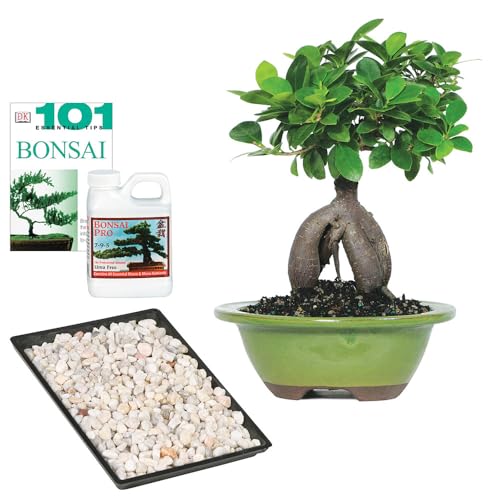
This Brussel’s Bonsai live grafted ficus kit includes a ceramic bonsai pot, accompanying fertilizer, and a humidity tray. While marketed as an indoor bonsai kit, the included humidity tray illustrates a practical principle: a shallow moisture reservoir can help stabilize root-zone humidity for potted plants. For cannabis cultivation in small spaces or germination zones, a humidity tray can complement other controls by maintaining steady moisture around roots and preventing rapid drying after watering. Consider this as a supplementary tool in a broader humidity strategy rather than a standalone solution.
Because this product centers on ornamental bonsai, it’s not a dedicated cultivation system. Users should combine it with purpose-built humidification or measurement gear if cannabis is grown nearby. The humidity tray can serve as a micro-stabilizer within a larger setup, especially in desktop or cabinet grows, where tight space makes comprehensive humidity control more challenging.
Buying Guide
Choosing humidity gear for cannabis grows depends on space, growth stage, and how actively you manage air moisture. Here are practical considerations to help you compare options and build a balanced humidity strategy.
Understanding growth-stage humidity targets
Seedlings and early clones generally benefit from higher RH, often in the 65–75% range, to reduce transpiration stress. Vegetative growth commonly tolerates 40–70% RH, while flowering often benefits from slightly lower RH (around 40–50%) to minimize mold risk. Use a hygrometer network to spot RH variation across a tent or room and adjust humidifiers or air exchange accordingly. In environments with limited airflow, humidity domes can be a temporary aid for seedlings, but you’ll need to remove them as plants mature to prevent condensation and disease.
Tool types and how they work together
Humidity control typically involves a combination of a humidifier or dehumidifier and reliable humidity measurement. Hygrometers provide the data you need to decide when to run a humidifier or adjust airflow. Humidity domes and trays help create microclimates for seedlings or rooted cuttings, while a compact humidifier serves small spaces without overwhelming the tent. For larger or more complex grows, consider a dedicated environmental controller that coordinates humidity with temperature and airflow for stable conditions.
Key purchase considerations
- Coverage area and capacity: Ensure the humidifier can reliably service your tent or room size, and confirm the tank capacity suits your runtimes between fills.
- Accuracy and coverage: High-accuracy hygrometers (±2–3% RH) paired with multiple sensors help track uniform humidity, especially in taller or larger tents.
- Ease of filling and cleaning: Top-fill models reduce spills; units with simple disassembly simplify cleaning to prevent mineral buildup that can affect mist quality.
- Reliability and safety: Auto shut-off features prevent overheating and water waste; leak-proof designs minimize spills and mold risk in grow spaces.
- Noise and energy use: For discreet grows, select low-noise pumps and energy-efficient components to avoid disturbing the grow area and electricity load.
Practical comparisons for common setups
For small grows (e.g., a compact tent under 2×2 meters), a dedicated humidifier like the BLEREMA unit paired with a few hygrometers can offer precise control without overwhelming the space. If you’re germinating seeds or propagating clones, humidity domes provide a temporary high-humidity microclimate that speeds rooting and reduces moisture loss. Larger setups benefit from distributed monitoring with several hygrometers plus a reliable humidifier or a controller that coordinates RH with temperature. Always plan for airflow—fans and exhausts help prevent mold when RH climbs.
Smart sourcing and maintenance tips
Keep spare batteries for hygrometers on hand and schedule regular cleaning to prevent mineral buildup or sensor drift. Calibrate readings against a known reference if possible, and place sensors away from direct airflow from fans or vents to avoid skewed data. When selecting products, prioritize items with proven reliability in humid environments and straightforward maintenance routines. Finally, preserve seedling growth by gradually releasing humidity domes as plants mature and require more air exchange.