
Leather patches offer a stylish way to customize hats, jackets, backpacks, and more. Pairing them with laser engraving yields precise designs, durable markings, and a professional finish. This guide spotlights five top patch kits and explains how to choose the right option for DIY projects or small studios. You’ll learn about backing methods, patch materials, sizes, and laser compatibility, plus practical tips for achieving clean burns, even colors, and lasting adhesion. Whether you’re small-batch crafting or experimenting at home, these selections cover common needs from adhesive patches to heat-pressed designs.
Summary table of selected products:
| Product | Brand | Patch Size | Backing / Method | Ideal For |
|---|---|---|---|---|
| GrliTra 50 Pack Leatherette Patches | GrliTra | 3 x 2 in | Adhesive, Heat-Activated | Hats, crafts, repairs |
| TWIG Leather Hat Patches For Engraving | TWIG | 3 x 2 in | Adhesive Backing; Heat required | Hats, apparel, small projects |
| MAPRIAL 100 Pack Leatherette Patches | MAPRIAL | 3 x 2 in | Adhesive Backing | Hats, garments, gifts |
| iFForce 90 Pcs Lasable Blanks | iFForce | Typically ~3 x 2 in (patches) | Heat-activated adhesive; iron or heat transfer | Hats, bags, key fobs, gifts |
| Dunzy 60 Pcs Blank Leatherette Patches | Dunzy | 3 x 2 in | Adhesive; adds thread-border detailing | Hats, jackets, crafts |
GrliTra 50 Pack Leatherette Patches

GrliTra’s 50-pack delivers consistent 3 x 2 inch rectangles of faux leather with an adhesive backing that activates under heat. The patches are described as smooth, durable, waterproof, and resistant to fading or discoloration, making them suitable for repeated laser engraving and long-term wear. The back panel is heat-activated, allowing both ironing and sewing if you prefer a more permanent attachment. This kit suits crafters looking to stock up for regular hat repairs, pattern customization, or small-scale patch projects with reliable performance.
In practice, you can laser-engrave or UV-print designs onto the leatherette before applying them to hats or apparel. The adhesive is designed for easy adhesion, which saves setup time in busy crafting sessions. For best results, ensure the fabric surface is clean and evenly heated during adhesion. The chestnut color option offers a warm, natural backdrop that engraves well with light-to-dark contrasts, depending on laser power and speed settings.
TWIG Leather Hat Patches For Engraving

These leatherette patches are made from artificial leather with a low-temperature hot-melt adhesive on the back and can be engraved or UV-printed. They are intended for use with heat-press machines or irons, with a recommended heat around 270 degrees Fahrenheit. When engraving, brown and red tones typically render as black, while black leather may reveal a white impression. Each patch is sized at 3 x 2 inches, a versatile dimension for caps such as baseball, trucker, and knitted hats. They can also be applied to jeans or handbags, expanding project possibilities.
Consider the heat-press workflow when planning your project. The patches are designed to bond securely with heat, then benefit from stitching or additional sealing for high-wear items. If you intend to engrave fine lines, test a sample patch first to refine power, speed, and dwell time. For multi-color UV prints, selecting compatible inks will yield the most predictable results on this faux leather surface.
MAPRIAL 100 Pack Blank Leatherette Patches

MAPRIAL’s 100-piece set offers consistent 3 x 2 inch patches with adhesive backing for reliable attachment. The patches are crafted from premium faux leather with a smooth, flat surface designed for laser engraving. The manual quality checks emphasize durability and fade resistance, ensuring a clean engraving surface and long-lasting appearance. With 100 pieces, hobbyists and small studios can support ongoing projects, gifts, and repairs without frequent reordering. The kit’s thickness and material provide a solid engraving canvas, making it well-suited for iconic logos, names, or decorative motifs on hats and apparel.
When using these patches, plan for a uniform engraving tempo to avoid scorching the adhesive edge. After engraving, apply heat to the back to activate the adhesive, then press firmly with even pressure. The neutral rustic finish pairs well with many color palettes, and the 3 x 2 inch size matches common hat panel dimensions, enabling consistent placement across batches.
iFForce 90 Pcs Lasable Blanks
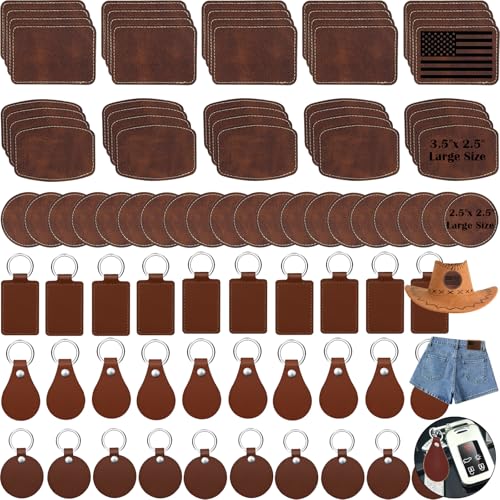
iFForce combines patches and key fob blanks for a versatile DIY kit. The patches are PU leather and suitable for ironing or sewing, with a smooth surface designed for crisp laser engraving. The kit includes blank key fobs for personalization, making it ideal for team logos, events, or gifts. The patches are described as durable, washable, and resistant to fading when properly sealed with heat transfer. This kit supports branded patches, name tags, and small signage, offering a practical option for customers who want a complete set in one purchase.
Practical guidance includes testing heat and power on a spare patch to calibrate the laser engraving for consistent results. For the key fobs, ensure the backing adhesive is fully activated and cured to prevent detachment with wear. The collection’s mixed-use design helps with both patch production and accessory customization in a single workflow.
MAPRIAL 100 Pack Blank Leatherette Patches
Note: MAPRIAL’s set emphasizes high-quality faux leather with adhesive backing, designed to take laser engraving with sharp detail. The patches’ neat stitching and flat texture create a refined canvas for personalized designs. The package includes 100 pieces, which is advantageous for ongoing projects, classroom activities, or a small business inventory. The 3 x 2 inch size and 1.2 mm thickness offer a balanced profile that engraves cleanly while remaining comfortable on headwear and garments. This makes it a dependable choice for designers who want uniform patches across multiple items.
For best outcomes, engrave in a well-ventilated area and verify the adhesive’s heat-activation steps. After engraving, press the patches to set the bond and avoid edge lift during washing. If you’re testing colors, consider a few sample patches to see how the material responds to different laser speeds and depths.
Buying Guide
Material and Texture
Choose patches made from faux leather or leatherette when you want animal-friendly options that still resemble genuine leather. A smooth, flat surface engraves more consistently and reduces the risk of burn marks or uneven tones. Texture can influence how the laser interacts with the surface; a very textured patch may require adjustments in focus, speed, and power to maintain crisp lines. For long-term durability, look for patches with fade-resistant finishes that won’t discolor under repeated use or UV exposure.
Backing And Attachment Method
Backing options fall mainly into two categories: adhesive with heat-activated backing and iron-on or heat-pressed patches. Adhesive patches work well for quick projects and clean installations, while heat-activated backs require heat or a press to activate the glue, creating a stronger bond. Some sets include stitching-friendly edges to allow additional sewing for extra security. Consider your project environment: hats and outdoor gear may benefit from heat-activated bonding, while delicate fabrics might require a gentler approach or stitching reinforcement.
Size, Shape, And Compatibility With Your Laser
Most common patches come in 3 x 2 inch rectangles, a versatile size for hats and apparel. If you plan large-scale custom designs, ensure your laser has enough bed space and that patches sit flat during engraving. Round patches, like 2.5 inch rounds, offer a different aesthetic and may require slightly different placement. Check the patch thickness (often around 1.0–1.2 mm) to ensure you don’t overload the laser or cause focal errors. Always test a sample patch to dial in power, speed, and focal length before processing batches.
Engraving And Color Behavior
Laser engraving on faux leather typically yields darkened marks where the material absorbs energy. Brown, tan, and natural hues may engrave darker, while black patches can sometimes reveal lighter footprints depending on laser type. UV printing is an alternative if you want bright, full-color designs, but it requires compatible printers and inks. If you’re using an all-laser workflow, expect high-contrast monochrome outcomes on lighter patches and experiment with raster settings to optimize edge definition.
Durability And Washing Considerations
Durability depends on both the material and the adhesive. Heat-activated adhesives tend to provide strong long-lasting bonds after cure, but improper washing or repeated flexing can weaken adhesion. If you’re making patches for outerwear or activewear, look for patches with reinforced edges or threads that resist fraying. Machine washing with gentle cycles and air drying can extend the life of patches, especially when used on frequently laundered garments.
Quantity, Value, And Use Case
Higher-quantity packs reduce per-unit costs, which is advantageous for hobbyists who print lots of patches or for small studios producing patches for clients. For one-off custom designs, smaller packs minimize waste and spare parts. Consider your typical project size: if you engrave weekly, a 100-piece MAPRIAL or 60-piece Dunzy kit may balance inventory with demand. For mixed-media projects, kits that bundle patches and key fobs (like iFForce) can streamline workflows and save planning time.
Safety And Handling
Always follow the manufacturer’s instructions for heat settings and ventilation. Faux leather materials may emit odors during engraving, so ensure adequate ventilation. Wear eye protection if your laser setup requires it and verify that the backing adhesives are not released as fumes during heat transfer. Store patches in a dry place to prevent adhesive degradation and maintain patch integrity over time.