
Low VOC primers help improve indoor air quality while delivering durable adhesion on common substrates used in automotive, industrial, and flooring projects. The selections below cover epoxy primers, direct-to-metal (DTM) options, and fast-curing urethanes that meet strict VOC standards. Each option emphasizes substrate compatibility, topcoat readiness, and reliable adhesion across steel, aluminum, concrete, and wood. Use the summary table to compare core details at a glance, then explore individual profiles to match your project needs, whether you’re restoring a car, refinishing floors, or prepping concrete.
| Product | Brand | VOC | Type | Notes |
|---|---|---|---|---|
| Speedokote Epoxy Fast Dry 2.1 Low VOC Primer Kit (Gallon) | Speedokote | Low VOC | Epoxy Primer & Sealer | DTM, 4:1 mix, adhesion to steel/aluminum/fiberglass |
| ArmorPoxy Epoxy Primer Low VOC | ArmorPoxy | Low VOC | Water-based Epoxy Primer | Fast cure, broad substrate compatibility |
| Eastwood Low VOC Black Epoxy Primer Part A | Eastwood | Low VOC | Direct-to-Metal Epoxy Primer | Sealer, sandable in 2–3 days; rust protection |
| Speedokote BLACK 2.1 Low VOC 2K Urethane Primer | Speedokote | Low VOC | 2K Urethane Primer | High build, strong fill; black finish |
| ALCM Low VOC Asphalt Primer | ALCM | Low VOC | Asphalt Primer | Weatherproof; promotes adhesion on weathered surfaces |
Speedokote Epoxy Fast Dry 2.1 Low VOC Primer Kit
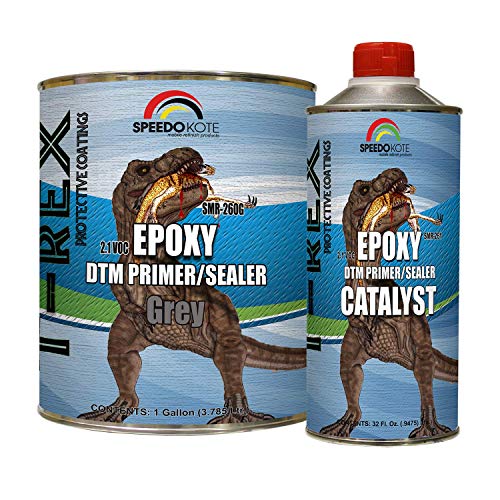
This epoxy primer and sealer is designed for direct-to-metal applications with a 4:1 mix ratio. An optional 5-10% reduction with a 0 VOC reducer (SMR-0075) lowers emissions further during application. The formulation is optimized for excellent adhesion to steel, aluminum, fiberglass, body fillers, and existing finishes, making it suitable for both automotive and industrial projects where fast processing and durable corrosion resistance are required.
Key considerations for use include its dual role as a primer and sealer, enabling one-step preparation before topcoats. The gray finish aids coverage and color consistency, reducing the number of coats needed. When planning batch work, factor in the 4:1 mix and the optional reducer to achieve the lowest practical VOC while maintaining film integrity and adhesion. Surface prep should follow standard degreasing and rust removal for best results.
ArmorPoxy Epoxy Primer Low VOC

ArmorPoxy’s Epoxy Primer Low VOC is a water-based primer designed for rapid cure and broad substrate compatibility, including concrete, wood, and metal surfaces. The formulation emphasizes low odor and indoor air quality compliance, making it suitable for time-sensitive projects in enclosed spaces. A gallon yields coverage advantages suitable for workshops and job-sites alike, helping contractors keep turnaround times on track without compromising adhesion or durability.
Fast curing is highlighted, with tack-free conditions occurring within a practical 5–8 hours depending on environmental conditions. The compatibility with ArmorPoxy epoxy floor systems and colors ensures a cohesive system from primer to topcoat, while the water-based formulation supports safer handling and easier cleanup. This primer is well-suited for contractors prioritizing a clean indoor environment and reliable substrate bonding across multiple surfaces.
Eastwood Low VOC Black Epoxy Primer Part A

Eastwood’s Low VOC Black Epoxy Primer is a direct-to-metal epoxy primer designed to seal and protect steel, fiberglass, and aluminum surfaces. It mixes 1:1 with catalyst 50245ZP, offering a straightforward preparation for a durable base coat. The primer provides excellent adhesion and rust prevention, contributing to extended paint life. Once cured, it sands well and supports robust topcoat adhesion for automotive applications.
Typical performance highlights include sandability within 2–3 days and a practical coverage estimate of around 140 square feet per gallon at a standard 1-mil film thickness. Eastwood emphasizes U.S. manufacturing quality and lifetime technical support, helping users troubleshoot application or compatibility questions and ensuring long-term performance in professional settings.
Speedokote BLACK 2.1 Low VOC 2K Urethane Primer

This Speedokote BLACK 2.1 Low VOC 2K Urethane Primer combines a high build and fill with a low-emission profile, delivering a versatile base for automotive refinishing. As a 2K urethane primer, it provides strong adhesion and resistance to surface imperfections, helping to create a smooth, uniform foundation for subsequent topcoats. The black formulation is particularly suitable for guide coats and color-matching scenarios that require a dark base to minimize show-through.
Application guidance emphasizes standard surface preparation and controlled curing conditions to maximize film integrity. While the product highlights high build, users should observe recommended working times and tack-free windows for optimal film formation. Compatibility with common urethane topcoats makes this a practical choice for body shops seeking efficient, durable priming solutions with reduced VOC impact.
ALCM Low VOC Asphalt Primer

ALCM’s Low VOC Asphalt Primer is designed to promote adhesion on weathered asphalt surfaces, offering a weatherproofing step for roofing and related applications. The formulation is formulated to meet VOC regulations of 350 g/L or less and is suitable for use in OTC states with VOC restrictions. The yield guidance indicates a typical rate of 0.5 to 1.0 gallons per 100 square feet, enabling contractors to plan projects with predictable coverage for large areas.
Ideal for projects involving asphalt substrates or weathered surfaces, this primer supports subsequent topcoats by providing a stable, well-adhered base. The low VOC profile makes it suitable for indoor or semi-enclosed environments where air quality is a priority, without compromising adhesion or surface preparation requirements in preparation for finishing coats.
Buying Guide
Choosing the right low VOC primer depends on substrate, project timeline, and topcoat compatibility. Here are key considerations to guide a purchase:
- Substrate compatibility: Epoxy primers excel on metal (steel, aluminum) and rigid composites, while urethane primers offer higher build on metal and some plastics. Asphalt primers address weathered roofing materials and asphalt surfaces. Match the primer type to the project substrate for optimal adhesion and corrosion resistance.
- VOC compliance and environment: Low VOC formulations reduce odors and emissions, suitable for indoor spaces and regulated regions. Check local VOC limits and ensure the product meets those standards for your application area.
- Mixing and cure times: Some primers are direct-to-metal with simple mixing ratios (for example, 4:1, with optional reducers) and variable tack times. Consider your shop workflow and ventilation when selecting a primer with faster cure times or longer pot life.
- Topcoat compatibility: Ensure the primer is compatible with your intended topcoat (urethane, enamel, or epoxy). Direct-to-metal epoxy primers often pair well with urethane topcoats; some urethane primers are designed to bond with common automotive finishes.
- Application conditions: Temperature, humidity, and surface preparation affect film formation and adhesion. Surface prep steps like degreasing, rust removal, and sanding are critical regardless of primer choice.
- Coverage and yield: Coverage varies by product and film thickness. Compare per-gallon coverage estimates to plan material needs for larger projects, noting that darker primers may require fewer coats under certain topcoats.
- Safety and handling: Water-based and low odor formulations generally offer safer handling and cleanup. Follow manufacturer guidelines for PPE and ventilation to minimize exposure during application.
- Budget and availability: VOC-compliant primers span a range of price points and availability. Evaluate total project cost, including hardeners and reducers where required, to determine the most cost-effective solution for your needs.
In practice, select an epoxy primer for maximum corrosion resistance and adhesion on metal substrates, a direct-to-metal epoxy primer for simpler workflows, or a low VOC urethane primer when you need higher build and a bold finish. For asphalt or weathered roofing, an asphalt primer with low VOC content helps maintain indoor air quality while promoting long-term adhesion. Always verify substrate compatibility and perform a small test area before full-scale application to ensure satisfactory topcoat performance.