
Choosing the right mesh count is essential for crisp, reliable screen printing. Mesh count affects ink flow, detail, and print speed. This guide reviews five commonly available options that focus on mesh count, from 100 to 160 counts per inch, including multi-mesh sets. Use this quick reference to compare frame quality, mesh material, and suitability for shirts, posters, and crafts.
The compact table highlights each product’s mesh count and brand to help you select the right kit for your needs.
| Product | Mesh Count | Brand |
|---|---|---|
| 160 Mesh Frames (2-Pack) | 160 | GoldUpUSAInc |
| 2-Pack 160 Mesh Silk Screen Frames | 160 | VEVOR |
| 4-Piece Mesh Screen Set | 110/160/230/305 | Caydo |
| 100 Mesh Silk Screen Fabric | 100 | ETPUVIUMBE |
| 110 Mesh Frames (6-Pack) | 110 | GoldUpUSAInc |
160 Mesh Frame Set, 20×24 Inches (2 Pack)

The 20 x 24 inch pre-stretched aluminum frames come with a white 160-count mesh. The outside frame measures 20″ x 24″, and the inner opening is 17.2″ x 21.2″. The frame tubing is 1 3/8″ thick, and the mesh is tensioned to 20–24 N/cm for steady prints with minimal ink bleed. This two-pack is suitable for multi-color designs or parallel runs. The white mesh adds visibility for ink control during setup.
- Mesh: 160 counts per inch (white)
- Frame: pre-stretched aluminum, 20″ x 24″
- Inside opening: 17.2″ x 21.2″
- Tension: 20–24 N/cm
- Pack: 2 screens
160 Mesh Silk Screen Frames, 20×24 Inch Kit

VEVOR’s Screen Printing Kit includes two aluminum frames sized 20×24 inches with a 160-count white mesh and high-tension nylon mesh. The kit is designed for DIY T-shirt printing and includes sealing tape for clean edges. The frames are built with laser-welded construction for rigidity, while the mesh is designed to penetrate ink smoothly and consistently, supporting bold designs with fine detail.
- Mesh: 160 counts per inch (white); high-tension nylon option
- Frame: aluminum, 20″ x 24″
- Pack: 2 frames
- Includes sealing tape
- Durable construction for daily use
4-Piece 20×24 Inch Mesh Screen Set
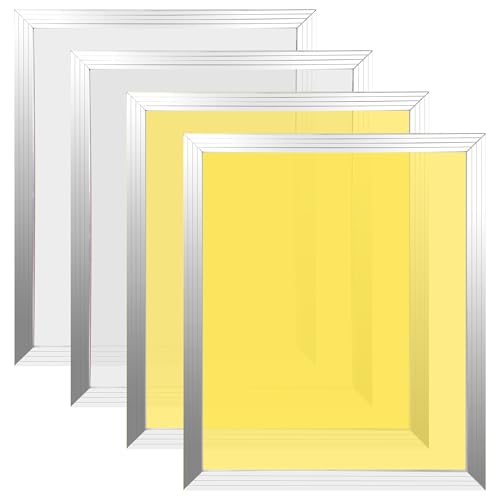
This Caydo set provides four aluminum frames with four mesh counts: 110 white, 160 white, 230 yellow, and 305 yellow. The frames are designed for durability, with sandblasted mesh surfaces and solvent-resistant glue to keep mesh stable over time. The range lets printers switch between high-flow and high-detail tasks without needing additional frames.
- Mesh counts: 110, 160 (white); 230, 305 (yellow)
- Material: Aluminum
- Finish: Sandblasted mesh surface
- Glue: Solvent-resistant
- Pack: 4 pieces
100 Mesh Silk Screen Fabric, 3 Yards

This 3-yard roll provides 100-mesh white silk screen fabric with a width of 50 inches. The length is 3 yards (2.7 meters), and the weave is a plain 1:1. It’s suitable for projects that require sturdier ink flow and simpler detail, making it a practical option for beginners or for performative print tasks that emphasize broad coverage rather than fine lines.
- Mesh: 100 per inch (40T)
- Width: 50 inches; Length: 3 yards
- Weave: Plain weave 1:1
- Material: White polyester
110 Mesh Frames, 20×24 Inches (6 Pack)

This set includes six aluminum frames sized 20×24 inches with 110-mesh white fabric. The outside dimensions are 20″ x 24″ and the inside opening is 17.2″ x 21.2″, with a frame thickness of 1 3/8″. The mesh is tensioned around 20–24 N/cm to balance ink flow and detail. The six-pack format makes it ideal for classrooms, batch printing, or multi-color projects where multiple frames are needed.
- Mesh: 110 counts per inch (white)
- Frame: aluminum; 20″ x 24″
- Inside opening: 17.2″ x 21.2″
- Tension: 20–24 N/cm
- Pack: 6 frames
Buying Guide
Mesh Count and Print Type
Lower mesh counts (around 100–120) pass more ink, making bold, less detailed prints easier on fabric or posters. Mid-range counts (about 134–160) strike a balance between ink flow and fine detail, suitable for most T-shirt designs. Higher counts (160–230 and beyond) are preferred for finer lines and delicate details or water-based inks where ink viscosity is lighter. Consider the desired level of detail, ink type, and substrate when choosing a mesh count.
Frame Material, Tension, and Longevity
Aluminum frames are common for screen printing due to light weight and rigidity. Tension is critical for uniform prints; typical ranges around 20–24 N/cm provide stable screens with consistent ink transfer. Frames that are pre-stretched save setup time, though you may still need to retension over time. A solid frame with a smooth surface and solvent-resistant glue helps prevent mesh loosening and ink bleed during repeated prints.
Ink Type and Fabric Compatibility
Plastisol inks benefit from slightly lower mesh counts to ensure good film formation, while water-based inks perform better with higher counts for finer details. For dark fabrics, higher mesh counts help with opacity and color accuracy. Test prints on your intended substrate to verify ink deposition, drying time, and color saturation before committing to large runs.
Kit vs. Individual Frames
Multi-piece kits, like Caydo’s four-mesh set or the VEVOR two-frame kit, offer versatility and cost efficiency for newcomers or small shops. If your projects vary in detail and ink types, a kit with multiple mesh counts can reduce the need to buy separate screens later. For specialized tasks, investing in single, high-quality frames with the precise mesh needed can yield better long-term results.
Practical Tips for Beginners
Begin with a mid-range mesh (around 160) for general-purpose T-shirt printing. Keep screens clean and dry to preserve tension, and store them away from direct sunlight to minimize frame warping. When switching meshes, ensure proper securing glue and retensionment if you notice ghosting or ink bleed. A starter kit with two or more frames saves setup time and helps you iterate designs efficiently.