
Choosing the right micron bag can influence filtration, yield, and overall quality when pressing flower into rosin. This guide reviews five popular nylon filter bags, offering a range of micron sizes, dimensions, and pack counts to fit different press setups. Each option emphasizes food-grade materials, heat tolerance, and practical design features to support consistent results.
| Product | Brand | Micron | Size | Pack |
|---|---|---|---|---|
| DABPRESS 40 Pack 160 Micron Bags | DABPRESS | 160 | 2×4.5 in | 40 pcs |
| The Press Club 25 Micron Nylon Bags | The Press Club | 25 | 1.75×4 in | 10 pcs |
| TRESSON 120 Micron Nylon Bags | TRESSON | 120 | 2.5×4.5 in | 40 pcs |
| Mogobe 2×4.5 Inch Nylon Bags | Mogobe | 40/75/119/150 | 2×4.5 in | 12 pcs per pack |
| Gutenberg’s 2×4 Inch Nylon Bags | Gutenberg’s Dank Pressing Co. | 20/25 (All Micron Sizes) | 2×4 in | 10-100 packs |
DABPRESS 40 Pack 160 Micron Bags
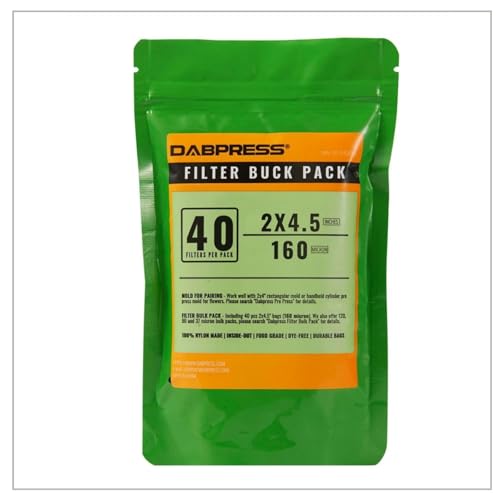
The DABPRESS 40-pack features 2×4.5 inch bags made from nylon mesh, marketed as safety material for reliable filtration during flower pressing. The 160 micron size is relatively coarse, facilitating quicker filtration while reducing clogging from larger particulates. With a bulk 40-count setup, this option supports larger sessions or frequent batch turnovers. The nylon construction emphasizes durability and repeated use, aligning with workflows that require multiple filters per batch. The 2×4.5 inch footprint is a common choice for compact presses or small-scale rosin setups.
Key considerations for this option include micron-to-flow balance and ease of handling. A coarser 160 micron bag typically yields faster throughput and easier cleaning, but may retain more solids in the initial run. For experimentation, starting with a 160 micron bag can help gauge flow rates and filtration speed before narrowing down to finer screens. Practical use notes emphasize safe material and convenient bulk packaging, making this bag set a solid baseline choice for budding rosin presser kits.
- 2×4.5 inches
- 160 micron
- 40 pieces
- Nylon mesh, safety material
- Bulk packaging for efficiency
The Press Club 25 Micron Nylon Bags

The Press Club offers 25 micron nylon filter bags sized 1.75 inches by 4 inches, sold in a 10-pack. These bags are described as 100% food-grade and dye-free nylon, with heat resistance up to 375°F. A notable feature is the pre-flipped design, advertised to save prep time, and a zero blowout guarantee. The product also highlights Made In The USA production, which can appeal to buyers seeking domestic manufacturing reliability. This smaller format and finer micron size are well-suited for rosin presses where cleaner filtration is desired without excessive resistance.
Considerations for use include filtration precision and bag longevity. The 25 micron size provides finer capture of particulates, potentially improving purity but increasing the risk of slower filtration if pressed too aggressively. The pre-flipped construction helps maintain stitching integrity and ease of use during busy sessions. For those prioritizing consistency and durability, this model offers a strong balance of filtration quality and user-friendly design in a compact 10-pack configuration.
- 1.75″ x 4″
- 25 micron
- 10-pack
- 100% food-grade & dye-free nylon
- Heat resistant up to 375°F
TRESSON 120 Micron Nylon Bags
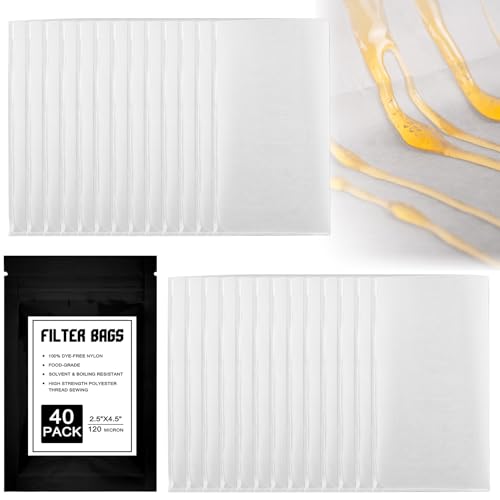
TRESSON provides 120 micron nylon filter bags sized 2.5 by 4.5 inches, offered in a 40-pack. The bags use high-quality food-grade nylon and are designed to withstand heat up to 375°F, making them suitable for rosin pressing under typical temperatures. The description emphasizes ease of use and reusability, encouraging washing and reuse. The 120 micron size sits between fine and coarse filtration, offering a middle ground that captures more particulates than coarser bags while still allowing robust flow, a practical choice for medium-scale pressing workflows.
Practical notes include heat tolerance, cleaning ease, and reuse potential. For rosin production, 120 micron filtration can help balance purity with yield during initial presses or when processing plant material with a moderate amount of solids. Users may experiment with rosin clarity by pairing this bag with other micron sizes in a staged filtration approach, depending on material quality and pressing method.
- 2.5″ x 4.5″
- 120 micron
- 40 pieces
- Food-grade nylon
- Heat resistant up to 375°F
Mogobe 2×4.5 Inch Nylon Bags

The Mogobe listing offers 2×4.5 inch nylon pressing filter bags in a 12-piece per pack format, available in multiple micron options including 40, 75, 119, and 150 microns. The bags are described as food-grade nylon mesh capable of withstanding up to 392°F, which is suitable for rosin pressing at common temperatures. A useful tip from the listing is to turn the filter bags inside out to keep stitching on the inside during use, which can help extend bag life and ease cleaning. This flexibility supports a modular approach to filtration across various pressure regimes.
With a variety of micron options, Mogobe lets users tailor filtration progressively or adapt to different materials. The 40 micron option offers finer filtration for rosin clarity, while coarser choices enable faster flows during initial passes. The 2×4.5 inch size is a practical middle ground for many compact presses, and the included care tip about turning bags inside out helps maintain seam integrity over time, especially after repeated heating cycles.
- 12 pcs per package
- 2×4.5 inches
- 40/75/119/150 micron options
- Food-grade nylon mesh
- Stability up to 392°F
Gutenberg’s 2×4 Inch Nylon Bags

Gutenberg’s offers tough 2×4 inch nylon micron bags with a focus on durability and efficiency. The bags are pre-flipped to save time and use strong, double-stitched nylon for reliable performance. The listing highlights 100% organic, food-grade, and dye-free nylon to support a clean workflow. Importantly, the line spans all micron sizes, with options like 20 and 25 microns in the 2×4 inch format, and packs ranging from 10 to 100, accommodating both hobbyists and higher-volume users. Strong construction and a broad micron range support flexible filtration strategies during flower pressing.
From a practical perspective, the pre-flipped design helps maintain stitch integrity during handling, while the durable material supports repeated heating cycles. For rosin producers, having access to multiple micron sizes in the same brand line can simplify workflow planning and quality control. The 2×4 inch size is a familiar choice for many desktop or small-scale presses, delivering a predictable fit for common rosin presses and filtration rigs.
- 2×4 inch
- All micron sizes available
- Pre-flipped for time savings
- Strong, double-stitched nylon
- 100% organic, food-grade nylon
Buying Guide
When choosing micron bags for flower pressing, several factors influence filtration quality, yield, and ease of use. Understanding micron size, bag dimensions, material safety, heat tolerance, and practical design features will help you pick a bag that aligns with your pressing workflow.
- Micron size and filtration goals: Smaller micron numbers (e.g., 25, 40) capture finer particulates and yield a clearer concentrate but may slow filtration and increase the risk of clogging. Larger micron numbers (e.g., 120, 160) filter faster and tolerate higher throughput but can pass more plant material. For rosin, many users start with mid-range sizes (60–120 micron) and adjust based on material quality and desired clarity.
- Bag size and fit: Choose dimensions that fit your press and collection vessel. Common sizes like 2×4 inches or 2.5×4.5 inches balance compatibility with standard rosin presses and strainers. If your workflow scales up, consider larger bags (such as 3×6 inches) to handle more material per filtration pass.
- Material quality and safety: Look for food-grade, dye-free nylon that resists leaching and maintains integrity under heat. Nylon mesh with durable stitching reduces blowouts and extends bag life, especially under repeated heating cycles.
- Heat tolerance and durability: Bags that can withstand temperatures up to 375°F or higher are suitable for typical rosin pressing. Pre-flipped bags, double-stitched seams, and reinforced edges contribute to durability during high-pressure presses.
- Reusability and cleaning: Reusable bags save costs over time; opt for bags that are easy to wash, rinse, and dry without residue. Some brands encourage turning bags inside out to preserve stitching and simplify cleaning, which can extend the bag’s life.
- Brand consistency and micron options: Selecting a brand that offers a range of micron sizes in the same product family can simplify workflow, ensure consistent quality across sessions, and make it easier to scale filtration strategies as you refine your technique.
In practice, a balanced approach often involves having at least three sizes on hand to accommodate different materials and desired outcomes. A finer 25–40 micron bag can be used for final filtration to attain a cleaner concentrate, while a mid-range 60–120 micron bag helps separate larger plant matter during initial passes. For workflows that require rapid throughput, a coarser 160 micron bag may be used for pre-filtration, followed by finer screens for clarity. Selecting a mix of sizes from trusted brands can streamline workflow and produce consistent results across batches.