
Parents seeking engaging, kid-friendly piano resources can choose from structured lesson books, online audio companions, and colorful, visually guided materials. This article highlights four top picks that work well for beginners and early elementary players, balancing traditional method books with creative aids like color-coded notes and stickers. Each option supports independent practice while giving caregivers clear pathways to track progress. The quick snapshot below summarizes the essentials of each pick, helping you compare format, pedagogy, and coverage at a glance.
| Product | Brand | Key Benefit |
|---|---|---|
| My First Piano Adventure: Lesson Book C | Faber Piano Adventures | Structured early lessons with clear progression for young beginners |
| Hal Leonard Piano For Kids | Hal Leonard | Beginner method with online audio to reinforce practice at home |
| Color Piano Stickers And Guide Book | QMG | Color-coded notes and durable stickers to aid visual learners |
| QMG Color Piano Books 1 & 2 | QMG | Two-book beginner series with color-coded notes and progressive difficulty |
My First Piano Adventure: Lesson Book C

Published by Faber Piano Adventures, this Lesson Book C targets the young beginner. At 72 pages, it guides early learners through fundamental concepts with careful pacing and music that reinforces reading skills and technique. The material emphasizes essential keyboard literacy, including simple rhythm patterns and basic note reading on the staff. Composer Randall Faber crafted the content to be approachable for home practice while offering a clear, methodical path toward independent playing. The structured layout supports parent supervision and teacher guidance, helping beginners build confidence as they progress.
Key features include age-appropriate repertoire, stepwise skill development, and clear articulation of technique. The book serves as a core component of a comprehensive early piano program, pairing easily with supplementary audio or video resources if available. While designed for a classroom or home setting, it also accommodates individualized pacing, ensuring each child can advance at a comfortable speed. The combination of approachable pieces and progressive exercises helps establish a solid foundation for future music study.
Hal Leonard Piano For Kids

Hal Leonard’s Piano For Kids is a beginner piano method designed to introduce early players to the keyboard with supportive lessons and online audio. The 48-page book offers structured progression suitable for beginners and includes access to online audio to reinforce listening, rhythm, and coordination. This combination helps young learners connect written notation with sound, supporting independent practice and steady improvement. The material emphasizes foundational skills such as proper hand position, note naming, and simple melodies, making it a practical first step for many families.
Key features highlighted by the publisher include a concise, kid-friendly layout and integrated audio resources that allow students to hear correct performances. The content focuses on developing essential piano fundamentals while keeping students engaged through approachable tunes and clear instructions. For parents, the book provides a straightforward framework to track progress and identify practice goals. The inclusive structure makes it compatible with classroom use or solo practice at home, depending on the learner’s schedule.
Color Piano Stickers And Guide Book
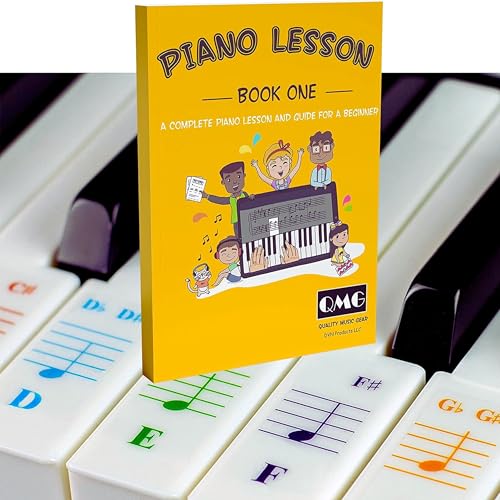
This color-coded piano lesson book from QMG combines a comprehensive guide with vibrant stickers that help beginners learn to read music and coordinate hands. The 52-page lesson book includes 28 progressively challenging exercises and 11 popular children’s songs to reinforce skills. It emphasizes reading staff notation, time signatures, durations, ledger lines, and basic repeats, laying a solid foundation for sight-reading. The stickers are printed on durable vinyl and designed to be keyboard-friendly, helping students memorize note positions without leaving residue or damage on the keys.
Key features include a color-coded system that aligns with the stickers, making visuals a central part of practice. The approach benefits visual learners by creating a memorable, color-driven path through early theory and technique. The guide aims to develop correct hand and finger techniques while introducing essential reading concepts. This combo of song material, exercises, and annotated visuals supports a well-rounded early learning experience for kids and beginners alike.
QMG Color Piano Books 1 & 2

QMG’s Color Piano Books 1 and 2 pair two beginner-friendly volumes with a consistent color-coding approach to notes and keys. The books are designed to introduce young players to reading music and correct technique through gradually increasing difficulty. Each book offers a mix of exercises and sheet music pieces suitable for first-year students, making it easier to monitor progress across multiple stages. The color-coded format helps students quickly identify note relationships and practice patterns, while the included songs provide motivation and a steady sense of accomplishment after completing each section.
Key features include progressive difficulty, a visual color system for note recognition, and a focus on basic techniques. The two-book set supports a paced curriculum that can be aligned with lessons or independent practice. This approach is well-suited for families seeking a hands-on, visual method to reinforce traditional notation while keeping practice engaging and accessible.
Buying Guide
When selecting online piano lesson materials for kids, consider the learner’s age, attention span, and reading readiness. Look for products that blend printed exercises with audio or digital resources to reinforce listening and rhythm. Color coding, stickers, and visual aids can be valuable for younger beginners who benefit from concrete cues, while structured progression remains essential for steady skill growth. Durability and print quality matter when books are heavily handled, and fathers, mothers, and teachers should assess whether a resource supports independent practice or requires adult guidance.
- Learning style and engagement: Visual learners may benefit from color-coded notes and stickers, while auditory learners gain from integrated audio.
- Progression and pacing: Choose materials that clearly advance from simple to more complex concepts with achievable goals.
- Format and accessibility: Printed books combined with online audio can reinforce practice at home; consider whether online resources are necessary for your child.
- Durability and layout: Look for sturdy pages, legible notation, and beginner-friendly layouts that reduce confusion during practice.
- Teacher vs. self-guided use: Some books are ideal for solo practice, others work best with periodic teacher instruction.
| Aspect | Comparison |
|---|---|
| Format | Traditional lesson books with optional online audio; some color-coded aids |
| Learning style support | Visual (stickers/color coding) and auditory (audio tracks) |
| Progression | Structured, stepwise progression across beginner levels |
| Durability | Printed pages; stickers designed to avoid keyboard damage |
| Best for | Young beginners needing clear visuals; families seeking self-guided options |