
Art printing demands a surface that respects color, detail, and longevity. This guide highlights five standout papers that cover inkjet reproductions, watercolor-inspired prints, and traditional printmaking processes. Each option balances texture, weight, and archival quality to suit beginners, hobbyists, and professionals alike. By pairing the right paper with your printer and technique, you can elevate every piece—from gallery-ready giclées to home studio experiments.
Below is a quick overview of the featured papers. The table captures core attributes to help you compare at a glance before diving into detailed product sections.
| Product | Brand | Type / Use | Size / Sheets | |
|---|---|---|---|---|
| Strathmore 59-701 Textured Inkjet Paper | Strathmore | Inkjet Paper | 8.5″ x 11″ • 25 sheets | Textured surface for depth and detail |
| PPD Watercolor Printer & Printable Fine Art Paper | PPD | Watercolor Inkjet Paper | 8.5″ x 11″ • 25 sheets | Heavyweight, watercolor-like texture |
| UCreate Printmaking Paper | UCREATE | Printmaking Paper | 9″ x 12″ • 100 sheets | Ideal for beginners; acid-free |
| Strathmore 300 Series Printmaking Paper Pad | Strathmore | Printmaking Paper Pad | 8″ x 10″ • 40 sheets | Soft textured surface; durable ink absorption |
| Tedco Sun Art Paper Kit | TEDCO | Sun Art / Cyanotype Paper | 8″ x 10″ • 12 sheets | Sun-activated cyanotype paper with acrylic panel |
Strathmore Textured Inkjet Paper 8.5×11

The Strathmore 59-701 Textured Inkjet Paper is designed for inkjet printers and offers a tactile surface that adds depth to art reproductions and photography. Weighing 80 pounds, the stock provides enough heft for mid-sized prints while remaining manageable for everyday home use. Its textured finish helps mimic traditional art papers, enhancing brush strokes, grain, and subtle tonal shifts without overwhelming image sharpness. The pack contains 25 sheets, supporting small print runs or test batches without frequent reorders.
In practice, this paper balances color fidelity with a pronounced surface character, making it suitable for art posters, limited-run prints, and gallery-ready pages. The ink lays down smoothly, and the texture provides a perceptible, professional feel that viewers can sense in person. While ideal for inkjet applications, results can vary with different printer profiles and inks, so a quick calibration pass is recommended for best results.
- Inkjet Paper Texture
- Measures 8.5×11 Inch
- 80lb Weight
- 25 Sheets
PPD Watercolor Inkjet Fine Art Paper 8.5×11
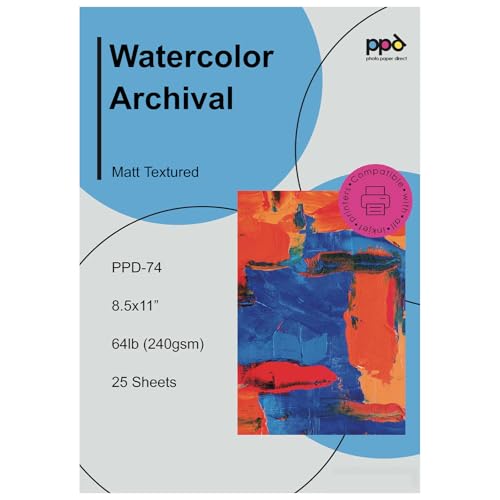
This premium watercolor paper is built for inkjet printers, delivering a heavy, watercolor-like texture across 8.5×11 sheets. At 240 gsm (64 lb), it feels robust enough for rich color reproduction and intricate detail while maintaining a forgiving surface for blending and layering. The acid-free formulation helps preserve color accuracy and longevity, making it a solid choice for archival prints, giclée reproductions, and art reproductions intended for framing or exhibition. A pack includes 25 sheets, ensuring you have ample material for a small series or multiple experiments.
Artists often choose this paper for high-detail botanical prints, luminous portraits, and experimental mixed-media pieces where surface texture can enhance the final piece. The surface texture supports color saturation without excessive feathering, and the paper’s fidelity stands up to sharp lines and subtle gradations. It is particularly well-suited to works that benefit from a painterly, hand-crafted look while still leveraging modern digital printing capabilities.
- High Quality Inkjet Watercolor Paper
- 8.5 x 11 inch, 240 gsm (64 lb)
- Giclée Prints: Vibrant color retention
- Acid-free and archival quality
UCreate White Printmaking Paper 9×12

UCreate Printmaking Paper is aimed at beginners and students exploring printmaking techniques such as block printing and relief printing. The heavyweight, acid-free stock provides a durable surface that can hold multiple inking passes without excessive warping. The 9×12 size offers a comfortable workspace for exploration, mini-series projects, or classroom demonstrations. The paper’s natural whiteness and sturdy fiber content make it a reliable base for practicing lines, textures, and shading with various ink types.
Key uses include practice sheets for linocut and relief techniques, as well as original prints in small runs. Artists can pairing this paper with rubber or wood blocks, brayers, and traditional inks to evaluate layering effects. The material’s acid-free nature helps ensure prints stay bright and stable over time, making it a solid choice for education settings or personal study portfolios.
- Ideal for beginning artists
- Heavyweight, acid-free
- Use for block printing and relief printing
Strathmore 300 Series Printmaking Paper Pad 8×10

The Strathmore 300 Series Printmaking Paper Pad is a glue-bound collection that suits students and hobbyists practicing printmaking techniques like linocut and screen printing. The 8×10 format provides a convenient, portable surface for demonstrations and studio experiments. The paper is described as natural white with a soft medium-textured surface, designed to absorb substantial ink while remaining durable through repeated passes. It’s acid-free and produced from high alpha cellulose wood fiber, which contributes to long-term stability and predictable print results.
For educators and learners, this pad offers a reliable training ground for tone, contrast, and edge control. The surface texture helps hold ink on contact, reducing feathering and enabling cleaner lines. While not specialty-pressed for archival gallery work, it serves as an economical option for practice runs, sketch-to-print workflows, and class projects that require repeatable outcomes.
- Natural white paper with a soft medium-textured surface
- Good ink absorption and durability
- Acid-free and high alpha cellulose
TEDCO Sun Art Paper Kit 8×10

TEDCO’s 8×10 Sun Art Paper Kit provides an accessible entry into sun-activated printing. The kit includes 12 sheets of sun art paper, along with an acrylic panel and simple instructions. Users expose the paper to sunlight, then rinse to reveal a cyanotype print. This process emphasizes a chemical-free, hands-on approach to artmaking that yields distinctive, blue-toned images. The included acrylic panel helps stabilize compositions during exposure, and the kit’s straightforward workflow makes it a popular choice for classrooms and home studios alike.
Sun printing appeals to photographers, mixed-media artists, and educators seeking a tactile, experimental technique. The medium’s sensitivity to light creates unique, one-of-a-kind artworks. While the final look is inherently cyanotype-based, the kit supports a broad range of experimental compositions, from botanical prints to abstract silhouettes, offering a creative gateway for learners and seasoned printers alike.
- 12 Sheets of 8″ x 10″ Sun Art Paper
- 1 Acrylic Panel and Instructions
- Easy to develop with water rinse
Buying Guide
Printer Type And Ink Compatibility
Choose based on your primary printing method. Inkjet papers excel for color accuracy, photo realism, and detailed art reproductions. Watercolor-inkjet blends add texture and depth, while traditional printmaking papers support block printing and relief techniques. Cyanotype papers offer a different route, using sunlight to activate the image. If you frequently switch between mediums, consider a paper that accommodates both inkjet printing and light manual techniques.
Paper Weight, Texture, And Finish
Paper weight influences stiffness and handling. Heavier weights (e.g., 80 lb or 240 gsm) feel more substantial and handle archival needs better, while lighter papers are flexible and affordable for tests. Texture and surface finish affect color saturation, edge definition, and the tactile experience. Textured surfaces enhance artistic feel but may soften fine detail; smoother finishes emphasize sharpness. For watercolor-leaning work, a heavier, textured surface can better mimic traditional media while remaining compatible with digital prints.
Archival Quality And Longevity
Archival properties, such as acid-free formulations and alpha cellulose content, help prevent yellowing and degradation over time. Papers labeled as acid-free and archival are generally preferred for prints intended to last, especially if they’ll be displayed or sold. For giclée and fine art prints, archival quality ensures color fidelity and image stability across decades.
Size, Format, And Packaging
Match size to your project and workflow. Standard sizes like 8.5×11″ and 9×12″ fit common home printers and classroom use, while larger formats are better for posters or gallery-ready pieces. Glue-bound pads offer convenient practice and study sessions, while loose sheets give flexibility for larger compositions or framing. Packages with multiple sheets help sustain runs or iterative testing without frequent reorders.
Specialty Papers And Creative Techniques
Specialty options like watercolor-inkjet papers, printmaking stocks, and cyanotype papers open unique avenues for artistic experimentation. Watercolor-inspired textures can elevate color depth and tonal richness in digital reproductions. Printmaking papers provide the right surface for block printing, while cyanotype papers enable sun-activated, hands-on processes that produce distinctive blue-toned imagery. Consider whether you want to explore traditional methods alongside digital printing.
Budget, Availability, And Workflow
Budget guides are crucial for ongoing projects. While specialty papers may cost more per sheet, their value comes from improved results and longevity. Availability can influence project planning—stock up on staple items like standard inkjet and printmaking papers, and keep a small reserve of specialty options for experiments. Finally, consider your workflow: testing with sample sheets before committing to a full run minimizes waste and ensures compatibility with your printer profile.
Perspective Highlights
Photographers may prioritize high color fidelity and archival stability for gallery prints, while painters and illustrators might value textured surfaces that enhance brush-like impressions. Printmakers benefit from robust stock that tolerates pressure and multiple passes, and educators often look for affordable bundles suitable for classroom use. By aligning paper choice with your primary art form and audience, you can optimize output quality, workflow efficiency, and long-term presentation of your work.