
Painting over polyurethane-coated surfaces requires primers that bite through slick finishes while preserving the wood’s character. The right primer improves adhesion, reduces peeling risk, and helps your topcoat look true to color. The five primers below offer a range from all-in-one solutions to dedicated urethane primers, with spray formats and multi-surface compatibility. Each is evaluated for adhesion, drying time, coverage, and ease of use on wood cabinets, furniture, and trim.
Whether you want maximum convenience or the strongest adhesion, these products cover common scenarios for repainting polyurethane-coated furniture. The list prioritizes products that work well on glossy or sealed surfaces while staying user-friendly for DIY projects.
| Product | Brand | Best For | Surface Type |
|---|---|---|---|
| ALL-IN-ONE Paint, Durable Cabinet & Furniture Paint | Heirloom Traditions Paint | All-in-one color & finish on furniture | Wood, metal, glass, ceramics, tile |
| Professional Primer Spray Paint, Gray | Rust-Oleum | Universal surface prep & rust protection | Wood, metal, concrete, masonry |
| COLORmaxx Primer Spray Paint, White | Krylon | Multisurface adhesion | Wood, metal, wicker, plastics, glass |
| Urethane Primer FP 410 | acme | Strong gray primer with fill for restoration | Wood, metal, plastics, resurfacing |
| Stynylrez 3-Tone Primer | Masino (Badger) | Self-leveling primer for multiple substrates | Plastics, metals, wood, resin |
Heirloom Traditions ALL-IN-ONE Primer Paint

The ALL-IN-ONE Paint from Heirloom Traditions combines primer and top coat into a single quart, claiming no sanding, priming, or top coat required. It’s designed for hard surfaces including walls, doors, cabinets, counters, and furniture, with a velvet sheen finish and low luster. The package includes a 30-color card to preview options under different lighting. This multi-surface capability makes it appealing for cabinets and furniture previously coated with polyurethane, as the built-in primer aims to simplify the process while delivering durable results.
In practice, the product’s built-in primer and top coat reduce steps, which can save time on projects like repainting polyurethane-coated furniture. The versatility across interior and exterior applications means users may apply this on various surfaces to achieve a uniform look. While it advertises no priming, some light scuffing and surface cleaning are still recommended for optimal adhesion and longevity, especially on glossy finishes. The quart size helps cover larger pieces efficiently.
Rust-Oleum 7582838 Professional Gray Primer Spray

This Rust-Oleum primer is a versatile spray designed to prepare a range of surfaces—ferrous and non-ferrous metal, wood, concrete, masonry—for paint. The oil-based formula provides rust protection and a durable finish that withstands weathering, maintaining consistent color. It covers up to 14 square feet and dries to the touch in about 15 minutes, allowing rapid topcoat application. Although primarily framed as a surface prep product for metal and wood, its adhesion and corrosion resistance can benefit projects involving polyurethane-coated furniture by improving the bonding surface for subsequent topcoats.
For polyurethane-coated wood, this primer can offer a robust base, particularly when painting furniture or cabinetry exposed to varying indoor conditions or outdoor elements. The indoor/outdoor capability makes it suitable for pieces that may be used in covered porches or sunrooms. While it’s not a dedicated urethane primer, its strong adhesion properties can help ensure a lasting finish when paired with compatible topcoats. Users should follow proper ventilation and allow sufficient cure time between coats as recommended on the can.
Krylon COLORmaxx Primer Spray Paint, White

Krylon COLORmaxx Primer is a spray-on primer intended to boost adhesion and smooth uneven surfaces. It’s designed for indoor and outdoor use and can be applied to wood, metal, wicker, most plastics, glass, plaster/ceramic, fabric, and paper. The primer helps ensure true paint color and provides premium adhesion and durability across a wide range of materials, making it a practical choice for projects involving polyurethane-coated wood where you want a reliable bonding surface before applying topcoats.
When applying to polyurethane-coated surfaces, this primer offers the benefit of a quick, spray-on option with broad compatibility. Adequate surface preparation—cleaning and light scuffing if needed—will improve adhesion. It’s especially convenient for furniture and small pieces where brushing may be less practical. The white color helps with coverage, improving the appearance of subsequent coats and reducing the number of coats required to achieve an even finish.
Acme FP 410 Urethane Primer

The Acme FP 410 Urethane Primer is described as a gray primer with strong fill properties, designed for high-coverage results and restoration work. It’s positioned as a urethane-based primer that can address surface imperfections, including scratches, making it suitable for prepping polyurethane-coated surfaces before applying topcoats. The primer’s emphasis on filling capability makes it a practical choice when refinishing furniture or cabinetry where the polyurethane layer may be glossy or slightly damaged, helping to create a more uniform substrate for subsequent finishes.
Users should note the product’s focus on coverage and fill, which is beneficial for smoothing out minor surface irregularities common on sealed wood. As with any primer, proper surface cleaning and light abrasion can enhance adhesion. The product’s urethane basis may influence compatibility with certain topcoats, so ensure the chosen topcoat is compatible with urethane primers and the underlying polyurethane layer.
Stynylrez 3-Tone Primer (Masino)
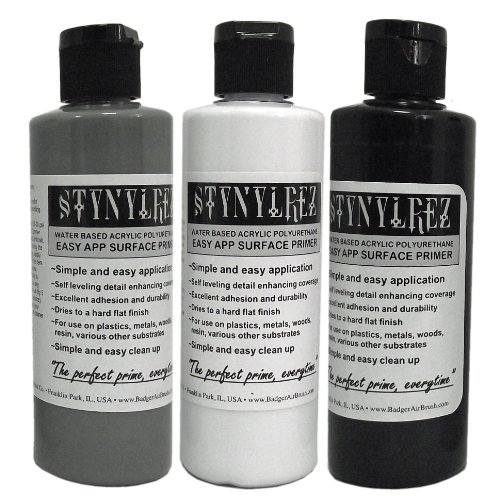
Stynylrez 3-Tone Primer is a self-leveling primer available in white, gray, and black. It’s designed for easy application and strong adhesion across multiple substrates, including plastics, metals, woods, and resin. The primer dries to a hard, flat finish, which can be advantageous when painting over glossy polyurethane finishes, as it helps create a uniform base for topcoats. The water-based formula promotes easier cleanup and lower odor relative to many solvent-based primers, making it suitable for indoor refinishing projects on furniture, cabinets, and trim.
Because it’s a versatile primer suitable for diverse substrates, Stynylrez can be a flexible choice for projects involving polyurethane-coated surfaces. The self-leveling properties help reduce brush marks or roller textures, contributing to smoother final results. As with other primers, surface preparation remains important—cleaning, light scuffing, and ensuring compatibility with your chosen topcoat will influence overall performance and durability.
Buying Guide
Key considerations can guide selecting the best primer for painting over polyurethane on wood furniture. The following aspects cover practical needs, surface conditions, and project goals to help you choose a suitable product.
- Surface compatibility and adhesion: Polyurethane creates a slick, nonporous surface that can resist paint adhesion. Look for primers marketed as multi-surface or specifically formulated to bite through glossy finishes. If your piece features hard-to-adhere polyurethane, a urethane primer or a dedicated bonding primer often yields the strongest bond with topcoats.
- Primer type: Built-in primers (all-in-one products) offer convenience and reduce steps, but dedicated primers may deliver stronger adhesion or better fill on severely glossy surfaces. Oil-based primers typically provide robust adhesion and stain-blocking, while water-based primers offer lower odor and easier cleanup but may require extra coats for tight adhesion on glossy surfaces.
- Topcoat compatibility: Ensure the primer is compatible with the type of topcoat you plan to use (water-based acrylic, alkyd, polyurethane, etc.). Mismatched coatings can lead to peeling or long-term failure. When using a urethane topcoat, pairing with a urethane primer can optimize bonding.
- Drying and recoat times: Fast-drying primers speed up projects, but some surfaces may require longer to cure before recoating. Always follow product-specific directions for recoat windows to avoid lifting the previous coat.
- Coverage and waste: Check the reported coverage per can or quart and estimate the area you’ll refinish. All-in-one products may cover less per gallon due to additional resin and pigment loading, so calculate accordingly for larger furniture jobs.
- Odor and ventilation: Oil-based primers typically emit stronger odors and require better ventilation. Water-based primers usually have lower odor and easier cleanup, which is advantageous for indoor furniture refinishing.
- Application method: Sprays are convenient for larger cabinets or frames and provide even coats with minimal brush marks, but require masking and careful distance control. Roll-on or brush-on primers may be better for tight spots, edges, and detailed surfaces, provided you want more control over texture.
- Preparation steps: Even with no-sand claims, light cleaning and scuffing can significantly improve adhesion on glossy polyurethane. Use appropriate cleaners, solvents, or deglossers as recommended by the manufacturer.
- Environmental considerations: For indoor projects, low-VOC formulations may be preferable. Outdoor projects require primers with weather resistance and durability.
In practice, the best choice depends on your goals. If speed and simplicity are priorities, an all-in-one option like Heirloom Traditions can streamline the process. If you need strong adhesion on a glossy polyurethane surface, a dedicated urethane primer such as the Acme FP 410 or a versatile spray primer like Krylon COLORmaxx may provide more reliable base for topcoats. For projects requiring minimal cleanup and flexible substrate compatibility, a self-leveling option like Stynylrez offers a convenient path to a smooth, uniform finish. Always test on a small area first to ensure compatibility with your specific polyurethane coating and topcoat combination.