
Choosing the right putty or curing repair compound for 3D prints can dramatically reduce downtime and improve finish quality. The items below are UV-curing putties, multi-use repair compounds, and precise bonding glues commonly used by hobbyists and professionals to fix cracks, fill gaps, and tidy up resin models. This guide highlights practical use cases, curing times, and surface compatibility so you can pick a solution that matches your project needs.
The following table summarizes five top picks that align with common 3D printing repair tasks—quick repairs, strong bonds, and good sanding or painting results. The selections emphasize UV-curing putties for resin prints, versatile repair compounds, and reliable bonding adhesives that complement 3D printing workflows.
| Product | Brand | Best For | Key Benefit | Notes |
|---|---|---|---|---|
| FUNCRECOL UV Light Curing Putty for 3D Prints and Models | FUNCRECOL | Quick repairs on resin models and surfaces | Under 1 minute cure with UV light; smooth application | Versatile on quartz, wood, plastic, stone; sandable and paintable |
| UV Light Curing Putty 100g | Elevate & Co. | Precision filling and modeling | Fast UV curing; durable, long-lasting bond | 100g capacity; suitable for professionals and hobbyists |
| Anergoo UV Light Curing Putty | Anergoo | Intricate repairs and detailing | All-in-one putty; quick UV cure; high hardness | 100g; ideal for elaborate 3D designs |
| FUNCRECOL UV Putty Kit Bundle | FUNCRECOL | Comprehensive repair projects | Rapid cure; easy shaping and finishing | Includes putty and related tools for repairs |
| NoClogger 3D Printing Glue | NoClogger | Bonding small parts and detail components | Industrial-strength CA adhesive; precise application | 40g bottle; fast-setting for tiny assemblies |
FUNCRECOL UV Light Curing Putty For 3D Prints
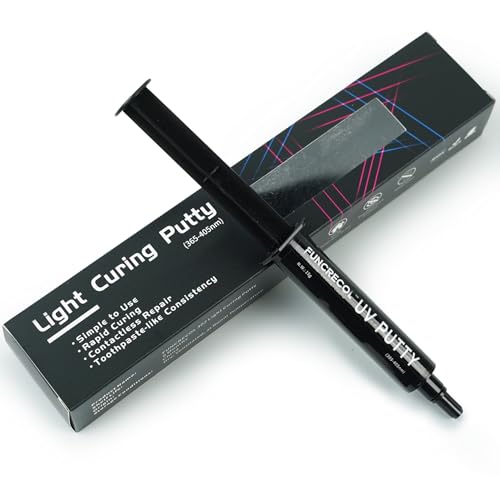
This putty is formulated for fast, user-friendly repairs on resin models and other surfaces. It features a toothpaste-like consistency that flows smoothly and fills small gaps and cracks with minimal shrinkage. When exposed to UV light in the 365–405 nm range, the putty cures in under a minute, enabling rapid iteration on models and prototypes. It is suitable for repairing chips on countertops and furniture as well as 3D prints, offering a professional finish after sanding or painting. The product emphasizes versatility across surfaces such as quartz, porcelain, plastic, wood, and stone, making it a convenient all-in-one repair option for makers who work with mixed materials.
Key application notes include: apply thinly for a seamless finish, cure with a UV lamp to harden quickly, and sand or paint after curing for a polished result. The putty’s fast cure is particularly advantageous for batches of prints that require quick touch-ups before painting. Users can also model details before curing, thanks to its smooth consistency, which supports precise sculpting and minimal post-processing.
UV Light Curing Putty 100g
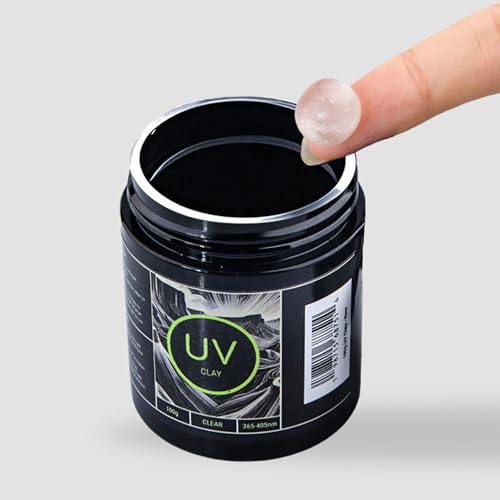
Elevate & Co.’s 100g UV light curing putty offers a versatile option for modeling, repairing voids, and filling minor defects in resin prints. The 100-gram size provides ample material for larger projects or repeated use across several parts. The putty cures rapidly under UV light, enabling quick-turnaround workstreams in both professional studios and home workshops. The formula aims to create a durable bond that remains stable through sanding and painting, helping maintain surface integrity during post-processing.
Practical considerations include preparing the surface for optimal adhesion, applying in thin layers to minimize smoothing work, and using a compatible UV light source to achieve consistent curing times. The putty’s strength supports functional prototypes and display-ready models alike, with dependable performance when shaping complex geometries or filling intricate gaps.
Anergoo UV Light Curing Putty

Anergoo’s UV curing putty is described as an all-in-one repair and design solution for 3D resin prints. The 100-gram capacity supports extended modeling sessions or multiple repairs without constant reloading. The putty cures quickly under UV light to form a sturdy, permanent bond, enabling repairs and modifications to be completed with high precision. Its versatility suits both professionals and hobbyists working on detailed layouts, custom parts, and decorative elements, while the fast cure minimizes downtime between iterations.
In practice, users can sculpt into fine features, fill cracks, and then cure to a durable hardness. The product is designed for reliability during crafting and repair workflows, reducing post-cure issues such as shrinkage or weak joints. Pairing with a consistent UV lamp helps ensure uniform results across parts with varying thicknesses.
FUNCRECOL UV Putty Kit Bundle

This putty kit bundle combines multiple tools for a complete repair workflow. The putty is highly pliable, designed to fill gaps, holes, and seams with minimal shrinkage. The kit is easy to use, allowing sanding, painting, and shaping after cure for a seamless finish. Curing is rapid under UV light—typically 1–2 minutes—streamlining model repair and customization projects. The bundle targets hobbyists and professionals who perform regular model finishing and want reliable materials with predictable results.
Practical guidance includes applying in thin layers, curing fully before handling, and finishing with primer or paint to achieve a professional appearance. Because the kit supports quick repairs, it’s well-suited for on-demand prototyping and workshop workflows where efficiency matters as much as outcome quality.
NoClogger 3D Printing Glue
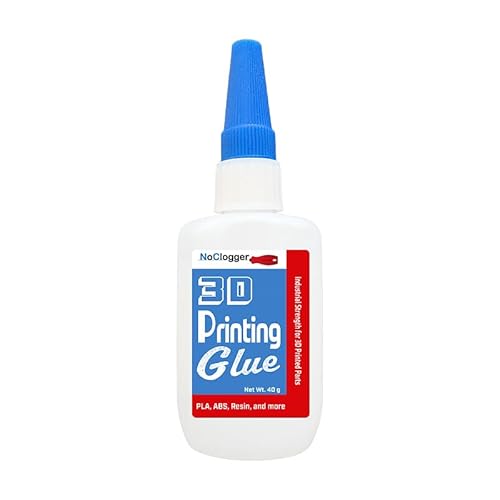
NoClogger specializes in rapid bonding for 3D printed parts. This 40-gram CA adhesive is designed for clean, precise application on small or intricate components. It’s particularly useful when assembling miniature parts or fixing delicate features where clamping is impractical. The industrial-strength formula provides quick-setting, robust joints suitable for functional prototypes and display pieces alike. The precision tip helps users target glue placement, reducing squeeze-out and cleanup time.
When using cyanoacrylate adhesives, it’s advisable to work in a well-ventilated space and to align parts carefully before curing. For larger assemblies, a slower-setting adhesive may be preferred, but for small fixes and fine details, NoClogger offers speed and reliability that can keep production moving smoothly.
Buying Guide: Key Considerations For Choosing Putty And Related Adhesives For 3D Prints
Choosing the right repair compound or glue depends on the print material, the severity of the defect, and the desired finish. UV-curing putties offer speed and precision for resin prints, but require a UV light source and a clean surface for best adhesion. Traditional glues or CA-based adhesives excel at bonding parts and finishing small assemblies where fill and finish are less critical than joint strength.
Consider these factors when selecting a product:
– Curing mechanism and time: UV-curing putties enable rapid fixes, but require safe handling of UV light. If you lack consistent lighting, a non-UV repair compound might be more practical.
– Material compatibility: resin, PLA, ABS, PETG, wood, stone, and metal surfaces each respond differently to adhesives and fillers. Check compatibility with your primary print material.
– Ease of use and finish: toothpaste-like putties are easier to sculpt and sand; glues are more about bonding strength. Paintability and sanding compatibility improve final appearance.
– Working time vs. cure time: faster cures reduce downtime but may be harder to shape before hardening. Some products offer adjustable cure times or layering.
– Safety and cleanup: some compounds release fumes or require ventilation; others are water-washable or easy to clean with basic solvents.
– Packaging and quantity: larger containers are economical for frequent users; smaller kits suit occasional projects or trials.
– Surface preparation: cleaning, degreasing, and light sanding often improve adhesion and final finish.
– Finish goals: if the goal is a seamless surface for painting, prioritize putties with minimal shrinkage and good sanding characteristics.
| Criteria | Putty 1 | Putty 2 | Putty 3 | Putty 4 | Glue 5 |
| Primary use | Quick fill and cure | Modeling and bonding | Detailing and repair | All-in-one repair bundle | Precise part bonding |
| Cure type | UV | UV | UV | UV | CA adhesive |
| Typical size | 100 g | 100 g | 100 g | Kit | 40 g |
| Best for | Resin models | General repairs | Intricate designs | Complete repair workflow | Small parts and joints |
- If you primarily work with resin prints and need rapid touch-ups, UV-curing putties from FUNCRECOL or Elevate & Co. are strong options due to their fast cure times and smooth finishes.
- For detailed sculpting or repairs on complex geometries, Anergoo’s putty offers a durable bond and good sculptability, making it well-suited for intricate projects.
- When you want a ready-to-use repair solution that covers multiple steps, a putty kit like FUNCRECOL’s bundle can save time and ensure compatibility across tasks from filling to finishing.
- For assembling or fixing small components where precision is essential, NoClogger CA glue provides quick-setting strength and controlled application.
Bottom line: the best option depends on your workflow. If speed and surface finish are priorities, UV-curing putties are highly effective. If you need reliability for assemblies and joints in addition to repairs, a high-quality CA adhesive can complement putty repairs. Always follow the product’s instructions for curing times, surface prep, and safety considerations to achieve optimal results on 3D printed pieces.