
For stained glass work, the right soldering iron balances heat, precision, and comfort. The tools below are among the best options on Amazon for hobbyists and professionals handling leaded or lead-free solder. They offer precise temperature control, fast heat-up, and sturdy tips suited for smoothing joints and setting fillets in copper foil work. This guide covers five top picks and helps you compare essential features to fit your workflow and space.
| Product | Brand | Key Benefit | Tip Compatibility |
|---|---|---|---|
| Hakko FX601-02 | Hakko | High heat capacity with mobility | T19 tips |
| YIHUA 928D-III | YIHUA | Digital control with portable design | Standard replaceable tips |
| Weller W100PG | Weller | Closed-loop temperature control for tip safety | 600/700/800°F tips |
| Weller WLIRPK8012A | Weller | Ergonomic grip and versatile tips | Chisel, screwdriver, bent screwdriver |
| WEP 926LED V3 | WEP | Integrated station with PID stability | Includes multiple tips |
Hakko FX601-02: High Heat Soldering Iron

The Hakko FX601-02 delivers impressive heat capacity in a compact form, making it well suited for stained glass tasks that require rapid heating and longer reach. Its dial temperature selection provides precise control across a broad range, supporting both leaded and lead-free soldering with confidence. Compatible with T19 tips, the iron supports a wide range of tip options for smoothing joints or building up fillets. The lightweight grip and balanced design reduce fatigue during extended sessions, and its mobility helps access tight frames and irregular panels found in sun catchers and leaded panels.
- Dial temperature control
- Compatible with T19 tips
- High heat capacity; mobile and long reach
YIHUA 928D-III Soldering Iron

The YIHUA 928D-III delivers a robust 110W heat source with a temperature range from 194°F to 896°F (90°C–480°C). This broad range provides the flexibility to solder delicate foil work at lower settings and perform heavier joints without overheating. A clear digital display, °F/°C readout, and an ON/OFF switch improve usability and safety. The compact design (about 197 g) promotes portability between stations or workbenches, while an integrated sleep mode and X-4 stand with a broader base help prevent accidents during use. It’s well-suited for stained glass projects where quick adjustments and reliable stability matter.
- 110W high power; 194–896°F range
- Digital display; °F/°C switch
- Portable with sleep mode; stable stand
Weller W100PG Heavy Duty Soldering Iron
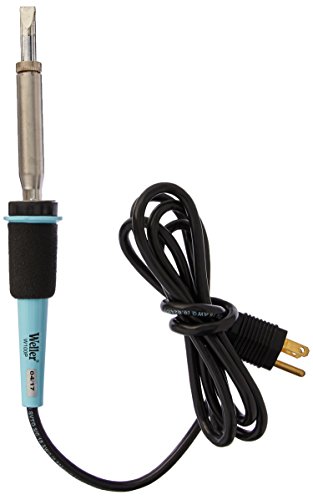
The Weller W100PG emphasizes safety with a closed-loop control method that protects both the tip and the workspace from overheating, meeting UL and CUL standards. The iron’s temperature is flexible through multiple tips, including 600°F, 700°F, and 800°F options, ideal for stained glass soldering where consistent temperature is key. A quick heat-up time of around 110 seconds with a nichrome-wound heating element lets you complete more joints in fewer passes, supporting larger panels and frequent soldering tasks without excessive downtime.
- Closed-loop temperature control
- Tips at 600/700/800°F
- Fast ~110-second heat up
WEP 926LED V3 Soldering Station

The WEP 926LED V3 combines a 130W maximum soldering iron with a PID temperature control system for stable, repeatable performance. The kit includes five soldering tips, solder wire, tweezers, a desoldering pump, a tip cleaner, and a stand—providing a complete setup for immediate work on stained glass panels. The integrated station saves desk space by housing the iron and holder, while the PID controller maintains steady target temperatures to ensure smooth, consistent solder lines across complex frames. A sleep mode reduces energy use when idle.
- 130W max; PID temperature control
- Includes 5 tips and accessories
- Space-saving integrated holder
Buying Guide
Key considerations help buyers choose the right tool for stained glass work. First, power and heat range matter: for delicate foil work, a lower, stable temperature is essential, while larger joints or leaded seams benefit from higher heat capacity. A 100–130W iron is a good baseline for most hobbyists and professionals. Digital or PID temperature control provides steadier results than an analog dial, reducing the risk of overheated joints and scorching glass.
Tip compatibility and availability are another important factor. Look for irons that support common tip families (such as T19) or offer a broad selection of tips suitable for fillets, smoothing, and precision work. Ergonomics also play a large role, since stained glass soldering can involve long sessions. Features like a comfortable grip, balanced weight, and a stable stand or holder reduce fatigue and improve accuracy. Safety features such as sleep mode, automatic shut-off, and temperature protection help protect both the craftsman and the artwork.
Kit contents and future expandability should influence your choice too. Some models arrive as complete kits with extra tips, wick, flux paste, and stands, which can save money and time for beginners. Others are modular, allowing you to upgrade tips or add a dedicated station later. When comparing models, consider workspace size, storage needs, and whether you prefer a stand-alone iron or a compact soldering station that keeps the tool readily at hand.
In practice, the best choice depends on your typical project profile. For frequent, small, delicate panels, a lower temperature range with precise digital control and a comfortable grip is ideal. For larger installations or long sessions, an iron with higher heat capacity and a robust stand reduces interruptions. If space is tight, a compact station with an integrated holder is advantageous. Finally, reliability and warranty should align with your budget to ensure consistent performance over time.