
Choosing the best sublimation paper for an Epson printer depends on transfer efficiency, durability, and substrate compatibility. The following five papers are widely used with Epson printers and other inkjet systems, featuring high transfer rates, quick-dry coatings, and versatile surface support. This article compares these papers to help you pick the right option for apparel, mugs, and home décor projects.
Use the quick reference table below to compare the five selected papers at a glance, then read detailed product sections for deeper specs and use cases. Each paper is selected for reliability, ease of use, and results on common sublimation substrates used in American crafts and small businesses.
| Product | Brand | Size | Sheets | Key Strength |
|---|---|---|---|---|
| Epson Dye Sublimation Paper | Epson | 8.5×11 in | 100 | Official Epson transfer paper with multi-use compatibility |
| Sublimax 2-Sided Paper | Sublimax | 8.5×11 in | 110 | Print on either side; instant dry; reduces misprints |
| HTVRONT 120-Sheet Paper | HTVRONT | 8.5×11 in | 120 | Over 98% transfer rate; quick-dry; back-side logo |
| A-SUB 125g Paper | A-SUB | 8.5×11 in | 110 | 125g; high transfer efficiency; vibrant colors |
| A-SUB 120GSM Paper | A-SUB | 8.5×11 in | 110 | 120gsm; instant dry; high transfer rate |
Epson Dye Sublimation Paper, 100 Sheets

The Epson Dye Sublimation Paper is a branded option designed for 8.5×11 sheets. It provides 100 sheets per pack and is positioned as a multi-use transfer paper suitable for light or white polyester fabrics with sublimation inks. The packaging lists dimensions and weight, helping users plan inventory and workflow in small studios or home setups. Being an Epson-branded product, it emphasizes compatibility with Epson printers and standard sublimation inks for reliable results on typical consumer substrates.
For users starting with sublimation or looking for a dependable baseline paper, this option offers a straightforward print-to-transfer process with predictable results on common light-colored textiles and coated surfaces. It pairs well with standard heat-press settings and typical post-press workflows used across American craft rooms and small shops.
Sublimax 2-Sided Sublimation Paper, 8.5×11

Sublimax offers a two-sided sublimation paper, enabling printing on either side for convenience. The instant-dry coating helps reduce smudges and makes handling simpler during the transfer process. This pack contains 110 sheets of 8.5×11 size, which is a common format for small business product runs and home crafts. The listing highlights easy detection of printing sides via a back-side cue, a feature that minimizes misprints and improves workflow efficiency when printing with Epson, Ricoh, or Sawgrass-compatible inkjet printers.
With its dual-side design and instant-dry performance, this paper is especially useful for projects that require quick turnaround and consistent outcomes across multiple items such as T-shirts, mugs, and small decor pieces. It is a practical choice for users who want flexibility without sacrificing transfer quality or reliability on compatible substrates.
HTVRONT 120-Sheet 8.5×11 Sublimation Paper

HTVRONT’s 120-sheet sublimation paper advertises a transfer rate above 98% with reinforced coating to prevent ink bleeding and maximize color vibrancy on polyester textiles. Its quick-dry performance helps streamline production, allowing users to move quickly from printing to transfer. The back side features a logo pattern that aids in identifying the correct printing orientation, reducing errors in busy production environments. The product emphasizes durability, with 120gsm thickness designed to withstand heat and handling during transfers.
This paper is described as printer-friendly and is touted to minimize jams due to its sturdy sheets, even when used with compatible Epson, HP, and Canon inkjet printers. The combination of high transfer efficiency, crisp color, and reliable drying makes it a versatile option for small studios producing apparel, home decor items, and gifts.
A-SUB 120GSM Sublimation Paper, 110 Sheets
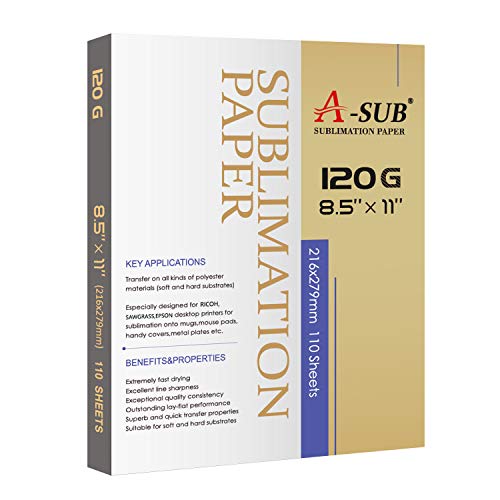
A-SUB’s 120GSM sublimation paper comes in a pack of 110 sheets and is positioned for compatibility with inkjet printers and sublimation inks. The product emphasizes a high transfer rate and vibrant color output, with notes that the paper maintains dimensional stability and minimizes bleed. The European-sourced raw material is highlighted to suggest relatively tight quality control, and the product claims resistance to deformation and an absence of pizza-wheel marks on the finished surface. It also stresses compatibility with a broad range of light-to-dark saturation projects, including mugs, apparel, and crafts.
In practice, this option supports a wide variety of crafting tasks—from T-shirts to mugs and beyond—making it a versatile choice for hobbyists and small businesses that prioritize color fidelity and reliable performance across multiple substrates. The 110-sheet count and 8.5×11 size align well with common workstation setups in the United States.
A-SUB 120GSM Sublimation Paper, 110 Sheets

A-SUB’s 125g sublimation paper is a robust option designed for light to heavy ink saturation on a wide range of substrates. With 110 sheets per pack, the paper emphasizes a high transfer rate and vibrant colors, with notes on preventing bleed and minimizing jams. The product highlights European-sourced substrates and reduced risk of back-leakage, helping maintain print quality on crafts such as T-shirts, bags, mugs, and other coated surfaces.
Users can expect a versatile material for custom gifts, home decor, and small-batch production. The heavier weight can help reduce curling on transfers and improve edge sharpness, making it a strong candidate for projects requiring more durable prints and extended wash life on textiles and coated items.
Buying Guide
- Printer compatibility: Choose papers that clearly state compatibility with Epson printers and sublimation inks. Some papers are designed as official Epson products, while others are formulated to work broadly with inkjet printers (Epson, HP, Canon, Sawgrass). Ensure your printer’s substrate handling and heat-press settings align with the paper’s recommended guidelines.
- Transfer rate and color vibrancy: Papers with higher transfer rates typically yield brighter, more durable colors and less ink bleed. If your projects demand vivid imagery on textiles, mugs, or ceramic items, prioritize papers that advertise high transfer efficiency (e.g., 98% or higher) and robust coating technology.
- Paper weight and finish: Heavier papers (e.g., 120gsm, 125g) are less prone to curling and can produce crisper edges on transfers. Consider double-sided or standard single-sided options depending on whether you need flexibility in printing orientation or a more forgiving surface for beginners.
- Drying time: Quick-dry or instant-dry papers help streamline workflows by reducing wait times between printing and transferring. This is especially valuable for small production runs or busy home studios.
- Substrate versatility: If you plan to transfer to a variety of surfaces (T-shirts, mugs, phone cases, ceramic tiles), select papers that explicitly list compatible substrates and coatings. Some papers are optimized for fabrics, while others target hard substrates as well as coated mugs.
- Edge curling and handling: Thicker sheets tend to lie flatter during transfer, reducing jams and misalignment. Look for reviews or product notes about curling resistance and reliability in printers with standard feed paths.
- Cost per sheet and ink savings: Compare the total sheet count and the perceived durability of the transfer. Papers with higher transfer efficiency can offset costs through less ink usage, particularly on large color blocks or complex designs.
- Packaging quality and consistency: Packaging that protects sheets from moisture and curling helps maintain sheet flatness and printing reliability. Consider brands with sturdy packaging and clear orientation markings for printing.
| Consideration | Impact |
|---|---|
| Printer compatibility | Opt for papers designed for Epson or compatible inkjet printers to ensure reliable feeds and color fidelity. |
| Transfer rate | Higher rates generally yield brighter, longer-lasting images with less bleed. |
| Weight and durability | Heavier papers resist curling and hold up better under washing and wear. |
| Drying time | Quick-dry papers speed up production but ensure the surface is ready for transfer without smudging. |
| Substrate range | Choose papers that support the substrates you commonly use, from textiles to mugs to hard-coated items. |