
Choosing the right wood for laser cutting and engraving is essential for achieving clean cuts, crisp engravings, and consistent results. This guide highlights five top products that blend high-tech laser capabilities with suitable wood materials, helping American makers select both the machine and the wood that best fit their projects. Whether you’re engraving intricate patterns on basswood or cutting thin plywood, the combinations below offer reliability, precision, and versatility.
| Product | Brand | Best For | |
|---|---|---|---|
| ACMER S2 7W Laser Engraver | ACMER | High-precision engraving on wood | Wood, Leather, Acrylic |
| 24 Pack Basswood Sheets 12″x12″ 1/8″ | QSJQllo | Basswood projects and test cuts | Basswood (1/8″) |
| Longer Ray5 5W Laser Engraver | Longer | Versatile wood engraving with large bed | Wood, Metal, Acrylic, Glass |
| Carverall K15 Pro 5W | Carverall | Beginner-friendly wood crafting | Wood, Coated Metal, Acrylic |
| Creality Falcon 5W | CREALITY FALCON | Large-area wood engraving and cutting | Wood, Leather, Acrylic |
ACMER S2 7W Laser Engraver

The ACMER S2 7000mW laser cutter emphasizes ultra-fine engraving with a 0.08×0.08 mm compression spot, delivering engraving accuracy to about 0.01 mm. It excels at detailed wood work and can cut through paulownia up to 13 mm and black acrylic up to 6 mm with repeated passes. The 300×300 mm work area supports single-pass projects, and its overall 48 W output provides robust cutting power. A fast 32-bit control chip enables engraving up to 10,000 mm/min, making it suitable for volume tasks where wood textures or precise lines matter. Optional rotary rollers and raisers expand possibilities for cylindrical objects.
For wood-focused users, the S2’s precision helps reproduce delicate patterns and fine fonts, while its compatibility with a range of materials (wood, leather, acrylic) broadens project options. Proper ventilation and safety practices are recommended when operating at higher speeds or thicker materials. Overall, the S2 offers a strong balance of accuracy, speed, and expandability for wood-centric projects.
Basswood Sheets For Laser Cutting, 1/8″

These basswood sheets are designed for laser projects with a Smooth surface and flat, burr-free edges. Each sheet measures 12″ x 12″ and is 1/8″ thick, providing a reliable base for intricate cuts, scroll sawing, wood burning, and painting. The wood is lightweight, easy to handle, and environmentally friendly, making it a go-to choice for hobbyists and small shops alike. The uniform grain and smooth texture help reduce warping and ensure consistent engraving results across multiple pieces in a batch.
The remaining sheets in the pack allow for large-scale layouts or multiple prototypes without reordering frequently. Because basswood is relatively soft, it accepts crisp engraving lines, clean cuts, and minimal chipping when used with appropriate laser speeds. This product pairing makes a practical foundation for any wood-centric laser project, from jewelry displays to miniatures and model-making.
Longer Ray5 5W Laser Engraver

The Longer Ray5 5W laser engraver emphasizes speed and precision with a 0.08×0.08 mm laser spot and engraving accuracy down to 0.01 mm. It features a spacious 400×400 mm working area, ideal for larger wood panels and projects that benefit from a broad engraving surface. A 240 MHz ESP32 chipset drives fast processing and efficient operation, delivering engraving speeds up to 10,000 mm/min. This combination supports intricate wood designs, consistent cutting, and efficient production runs for DIY wood projects and educational workshops alike.
Designed for versatility, the Ray5 supports a wide range of materials beyond wood, including metal, acrylic, and glass. The large bed helps with sheet goods or multiple components in a single pass, reducing setup time. The device is well-suited for makers pursuing bigger projects, such as signs, plaques, or framed decorations that require parallel processing across several pieces.
Carverall K15 Pro 5W
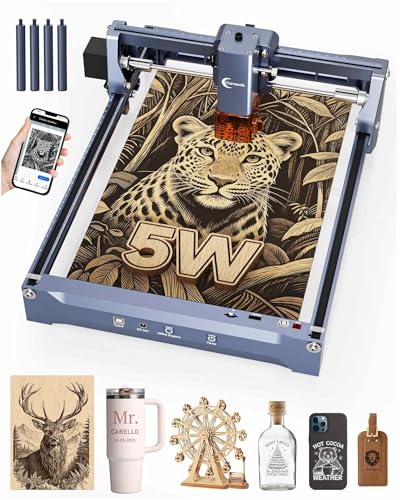
The Carverall K15 Pro offers true 5W laser power with a claimed 0.01 mm precision and a top engraving speed of 15,000 mm/min. The compact 200×300 mm working area makes it suitable for desktop setups and hobbyist studios where space is at a premium, yet it still delivers detailed results on wood and other materials. The kit includes a user-friendly software workflow, and the device emphasizes quick setup with a focus on reliability and portability. Safety features and compatibility with multiple operating systems simplify the learning curve for beginners.
For wood workers, the K15 Pro strikes a balance between accessibility and performance. The machine handles small to mid-size wood pieces with crisp edges, and the 5W rating provides enough power for clean cuts and precise engravings on thinner boards. It’s a practical entry into more sophisticated laser work without sacrificing accuracy in early projects.
Creality Falcon 5W Laser Engraver
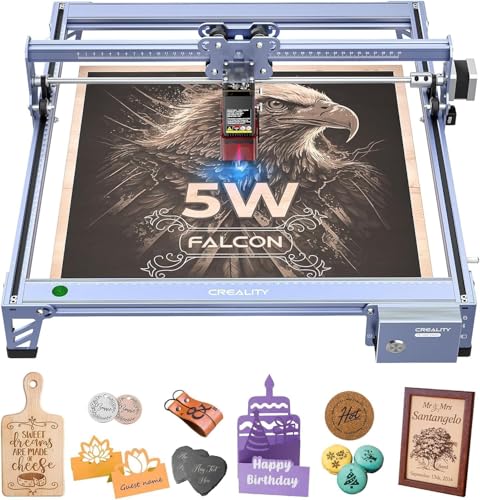
The Creality Falcon 5W laser engraver combines a 0.06×0.06 mm spot size with high-precision control, delivering engraving and cutting accuracy within approximately 0.004 inches. It supports rapid engraving up to 10,000 mm/min and offers a large working area of 400×415 mm, enabling bigger wood panels to be processed in a single pass. The Falcon’s offline usage capability and a 32-bit control chip contribute to stability and speed, while its compatibility with common software tools broadens its appeal for wood crafters who want reliable performance without constant computer connectivity.
For wood-based projects that require larger formats—signage, plaques, or decorative panels—the Falcon provides a strong combination of speed, accuracy, and workspace. Potential users should consider ventilation needs and safety practices for high-output runs, as well as the availability of optional add-ons such as rotary rollers to handle curved or cylindrical wood objects.
Buying Guide
Material Compatibility and Selection
Choosing wood compatible with your laser cutter involves considering density, resin content, and thickness. Basswood and poplar offer clean engravings and predictable cut lines, especially at 1/8″ or thinner. Denser hardwoods like birch or oak can require higher power or multiple passes and may produce more charring if not tuned. Review machine specs for recommended material types and thickness maxima, and run test engravings to calibrate speed and power for your wood of choice.
Engraving Area and Work Surface
Working area matters when you plan large signs or boards. A larger bed reduces the need for cutting and re-fixturing, improving consistency across multiple pieces. If you frequently work with sheet wood, a 400×400 mm or larger bed, like the Longer Ray5 or Creality Falcon, can streamline production. For tabletop projects or classroom use, 200×300 mm or smaller may suffice and keep pricing lower.
Power, Speed, and Material Thickness
Higher power (5 W or more) generally enables deeper cuts and faster engraving on wood, but it may need more robust cooling. Speed up to 10,000 mm/min is common for quality engravings in wood, but material thickness dictates actual results. When cutting wood, consider the maximum thickness each machine can reliably handle and whether you’ll perform single-pass work or require multiple passes for thicker panels.
Software, Compatibility, and Workflow
Software compatibility is key for a smooth workflow. Many machines support LightBurn, LaserGRBL, or vendor-provided interfaces. Ensure your computer’s OS is compatible and check if offline operation is important to you. Beginner-friendly models typically offer guided setup, safety features, and straightforward file handling, while more advanced options provide deeper control for complex vector engravings.
Safety, Accessories, and Maintenance
Look for safety features such as enclosed housings, protective eyewear, and proper venting. Accessories like rotary rollers expand the range of projects by enabling cylindrical objects, while raisers accommodate taller pieces. Regular maintenance—cleaning lenses, checking air flow, and inspecting belts or mounts—prolongs the life of the laser and maintains consistent results.
Cost, Upgradeability, and Long-Term Value
Balance initial cost with upgrade paths. Entry-level machines with robust software support and spare parts availability provide a lower barrier to entry, while higher-end units offer larger beds, stronger power, and more precise control. Consider future project plans, as investing in a machine with expandable accessories can extend its useful life and keep it aligned with evolving woodworking needs.